
Beyond the Awards: Lessons from the Shortlist distils sharp, real-world insight from projects recognised in the CIHT Awards 2026. We ask shortlisted entrants four focused questions on legacy, skills, key learning, and future trends to discover what’s working now and what’s coming next. It’s essential reading for sector professionals looking to benchmark their work, apply lessons learnt now and stay ahead of change.
Overview of shortlisted project: Before the Coastal Pedestrian Access, Ma Wan Chung Village – a historic fishing village in Tung Chung was disconnected from the town, restricting inclusive pedestrian movement and scenic coastal enjoyment.
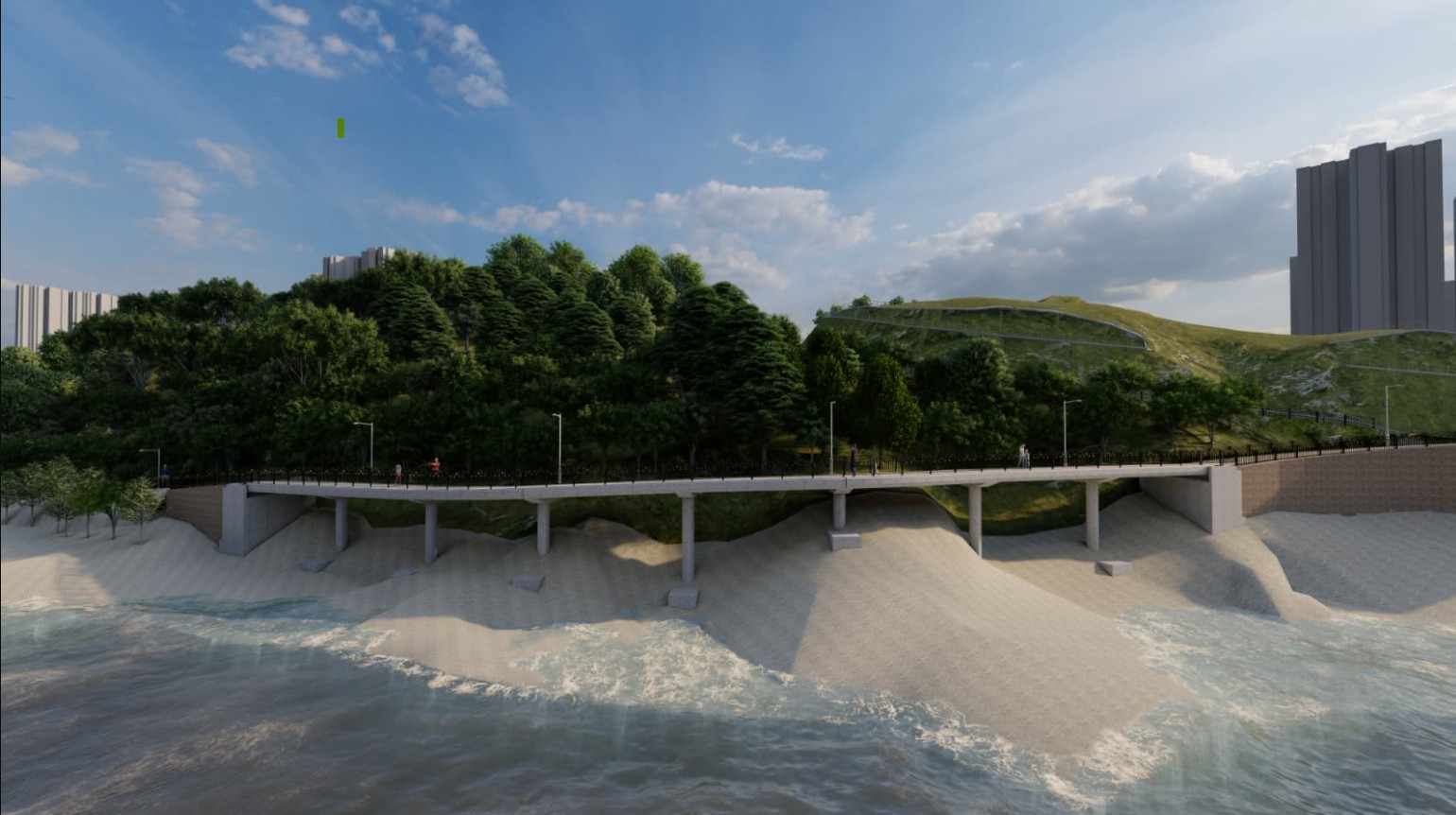
This 240m long and 4m wide access now provides seamless linkage between urban and rural areas along the coastline.
It excels through strategic design by optimising the access alignment and elevation to reduce impact on the declared monument – Tung Chung Battery and the surroundings, while preserving views and delivering strong results in enhancing community connectivity and promotion of “Urban-rural Integration”.
A model of balancing infrastructure, heritage protection, and sustainable public realm.

The Coastal Pedestrian Access (CPA) was designed in response to its highly sensitive physical, environmental, and heritage context, turning these challenges into drivers of a lasting and meaningful legacy. We collaborated closely with the Civil Engineering and Development Department (CEDD), to reconnect Tung Chung Waterfront Promenade with the historic fishing village of Ma Wan Chung, while safeguarding heritage and the coastal environment. From the outset, the 240m-long, 4m-wide pedestrian route was carefully aligned to respect the declared Tung Chung Battery, a Qing Dynasty coastal defence monument dating back to 1817.
Through early and continuous engagement with the District Council, Rural Committee, village representatives, and relevant government authorities, we have embedded community needs, heritage protection, and environmental considerations into every design and delivery decision. The strategic adoption of a hybrid solution—comprising an 80m footbridge near the Battery and a 160m at-grade footpath—allowed the access to follow the steep gradients of Tung Chung Road North while remaining below the monument. This approach preserves unobstructed views from the Tung Chung Battery, minimises ground disturbance and slope cutting, and provides resilience to extreme weather conditions, particularly given the project’s close proximity to the coastline.
The seamless, inclusive, and barrier‑free route encourages everyday use by residents of all ages and abilities, offering significantly reduced journey duration —cutting travel time by around half between Ma Wan Chung Village and Tung Chung Town — while enhancing the overall walking experience. Positive community response and the growing number of people enjoying sunset walks, reflects a clear sense of ownership. As Tung Chung continues to grow, the CPA will remain as a lasting asset that promotes active travel, recreation, and meaningful urban-rural integration.

While technical competence remains fundamental, such projects increasingly rely on site‑responsive engineering, strong coordination capability, and effective heritage risk management, particularly where works are constrained by sensitive terrain, coastal conditions, and declared monuments. Clear, open, and transparent communication—both within multidisciplinary teams and with stakeholders—is essential to maintain alignment and confidence throughout complex decision‑making processes.
A key project‑specific skill was the ability to select an appropriate construction method suited to steep coastal terrain and restricted working space. For the Coastal Pedestrian Access, the adoption of small size of pre‑bored socketed H‑piles enabled the works to be carried out without heavy piling rigs or extensive temporary working platforms on the slope. This approach enhanced site safety, shortened construction time, and significantly reduced noise, vibration, visual impact, and disruption to nearby villages and heritage assets.
Equally important was skills in heritage protection planning and monitoring integration. Given the proximity of the works to the declared Tung Chung Battery and the Fu Tei Wan Kiln Site of Archaeological Interest, Archaeological Watching Briefs were arranged in advance of any excavation works in sensitive areas. Qualified archaeologists were engaged to inspect, direct, and supervise excavation activities to ensure that any archaeological deposits encountered were promptly identified, recorded, and protected in compliance with statutory requirements.
In addition, settlement, crack width, tilting, and vibration monitoring points were established early around the heritage sites to safeguard against potential construction impacts. Delivering these measures required close technical coordination among engineers, archaeologists, contractors, and relevant authorities, ensuring construction progressed efficiently while fully protecting cultural heritage and meeting regulatory obligations.
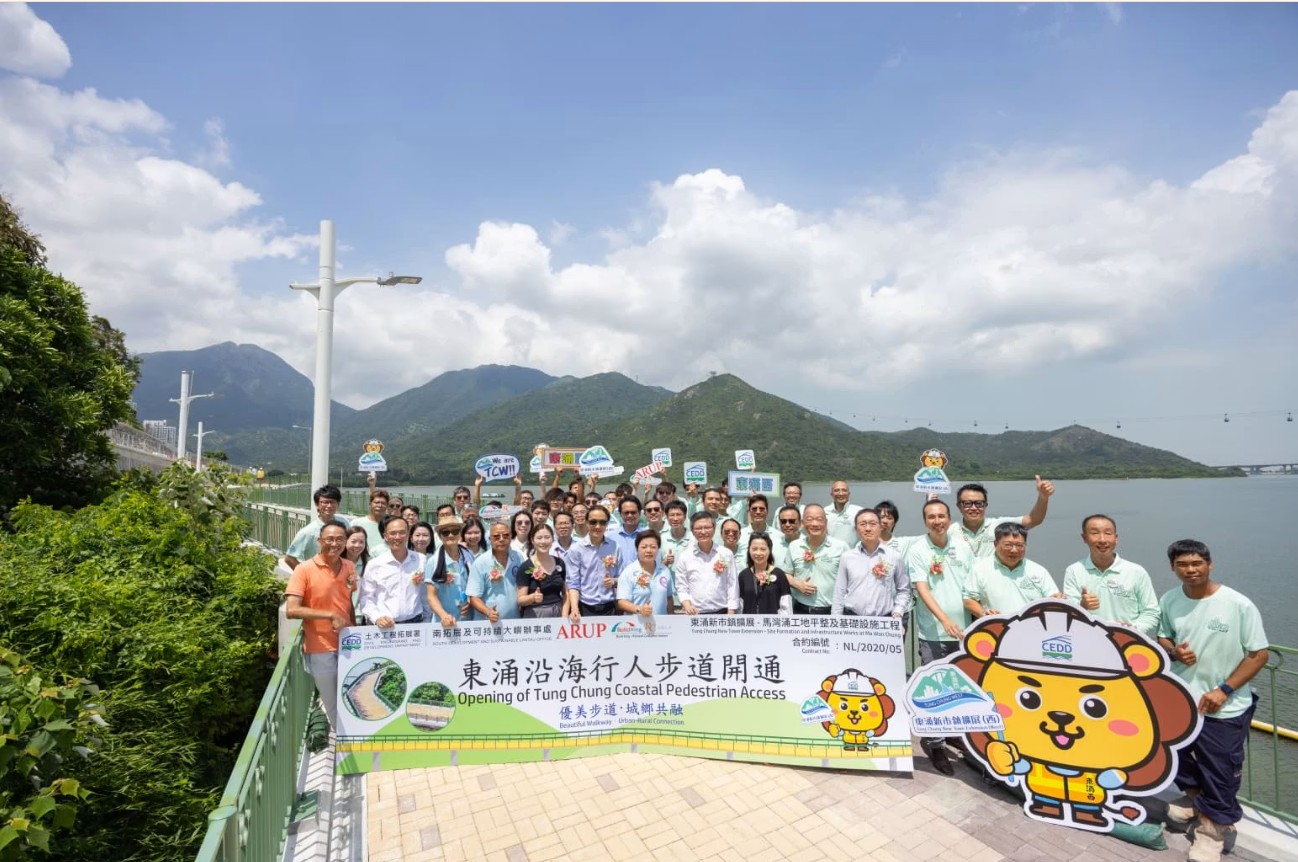
A key lesson from this project was the importance of recognising site constraints early and addressing them through structured planning and coordination. Early involvement of stakeholders and authorities—including the District Council, Rural Committee, village representatives, and relevant government departments—at the planning stage enabled informed decision-making when dealing with challenges such as proximity to heritage assets, steep terrain, and works along the coastline.
The project also reinforced the importance of proactive risk management and monitoring. Protective measures—including settlement, crack width, tilting, and vibration monitoring in the vicinity of the Tung Chung Battery and the nearby Fu Tei Wan Kiln Site of Archaeological Interest—were implemented to ensure construction activities did not adversely affect heritage assets.
Moving forward, we will build on the success of this project by placing even greater emphasis on early engagement, proactive risk identification, and clear coordination arrangements, fostering a collaborative delivery culture that supports effective decision-making and successful project outcomes.
The sector should place increasing focus on infrastructure that integrates urban development with existing rural communities and heritage settings, rather than treating them as separate or competing environments. As cities expand, projects like the Coastal Pedestrian Access demonstrate how carefully planned pedestrian infrastructure can reconnect historic villages with new town developments, supporting social cohesion while preserving local character and cultural assets.
There is also a growing need to adopt low-impact, buildable construction approaches in sensitive coastal and hillside locations. Selecting construction methods that reduce temporary works, limit disturbance, and improve safety—such as smaller-scale plant and simplified access arrangements—allows infrastructure to be delivered efficiently while minimising environmental, visual, and community impacts.
In addition, heritage-aware design and early integration of protection and monitoring measures are becoming essential as infrastructure is increasingly delivered in close proximity to declared monuments and archaeological sites. Treating heritage protection as a core project requirement, rather than a constraint addressed later, leads to more robust approvals and better long-term outcomes.
Finally, the sector should continue to emphasize whole-life value and climate resilience, particularly for coastal infrastructure. Designing assets that are durable, low-maintenance, and resilient to extreme weather ensures long-term public benefit and supports sustainable development objectives. These trends collectively reflect a shift towards infrastructure that not only performs technically, but also strengthens places and communities over time.
Arup is a global consultancy with extensive technical and advisory expertise. We guide, plan and design the future of the built environment.
www.arup.com
If you work in highways and transportation, keep an eye out for Beyond the Awards: Lessons from the Shortlist overview (Coming soon) — your single go-to source for sharp, practical insight drawn from standout projects and the people behind them. By bringing together key takeaways from award entries and candid interviews with leading contributors, this feature turns real-world experience into real-world learning that you can apply today to your projects while helping you stay prepared for what’s coming next.
2026 CIHT Award Winners
The results for the 2026 CIHT Awards will be announced at the Royal Lancaster Hotel, London on 17 June 2026. To find out more about the Awards Ceremony visit here.
CIHT Statement
The opinions expressed in this article are those of the authors. They do not purport to reflect the opinions or views of the CIHT or its members. Neither the CIHT nor any person acting on their behalf may be held responsible for the use which may be made of the information contained therein


