
Evidence to support the use of 20mph zones is growing according to Queen’s University Belfast. The university conducted a review of current evidence and concluded that the zones are effective in reducing the number and severity of road user collisions and casualties.
Join other savvy professionals just like you at CIHT. We are committed to fulfilling your professional development needs throughout your career
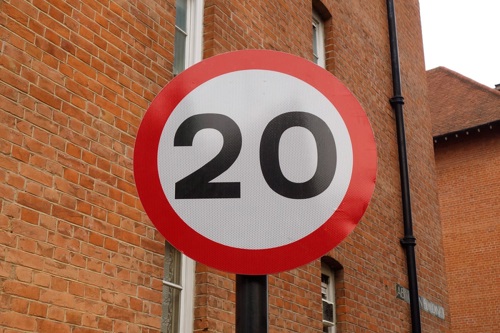
Nine published studies into 20mph zones were examined. One indicated that they are associated with reductions of 42% in casualties to all road users, including a 32% drop for pedestrians and 17% for cyclists.
Another showed a 25% decrease in pedestrians and a 17% fall in cyclists involved in collisions following the introduction of 20mph zones. And a third observed a significant reduction in casualties per kilometre travelled, as well as fewer collisions and casualties on streets just outside the 20mph zone border.
“Our findings show a growing body of evidence to support the use of 20mph zones, showing them to be effective in reducing the number and severity of collisions and casualties,” said Queen’s University Belfast’s Centre for Public Health reader Dr Ruth Hunter.
But she added that the research has also highlighted a lack of current evidence relating to the impact on public health, air pollution, and noise pollution.
“Further evidence is also required around the effectiveness of signage-based speed limits. We need to continue to gather and build on this evidence so that we can adequately inform future road safety policies that could help to address the global epidemic around road injuries.”
Observed changes in pollution as a result of 20mph zones were not considered statistically significant in the studies reviewed, but some evidence was found for increased liveability, including physical activity, following their introduction.
One study which looked at seven UK sites saw 44% of participants report that walking was now more pleasant, due to slower and less traffic.
However some studies expressed concerns that the zones ‘have the potential’ to lead to a relocation of collisions. And one also found that area speed limits were especially effective when combined with traffic calming measures.
(Photograph: Alastair Lloyd)


Join other savvy professionals just like you at CIHT. We are committed to fulfilling your professional development needs throughout your career
{{item.AuthorName}} {{item.AuthorName}} says on {{item.DateFormattedString}}: