
Traffic reduction, lower speeds and better driver behaviour are among possible solutions to bring down levels of harmful ‘non exhaust emissions’ (NEE) from vehicles, including particles released by brake, tyre and road surface wear, a report has found.
Join other savvy professionals just like you at CIHT. We are committed to fulfilling your professional development needs throughout your career
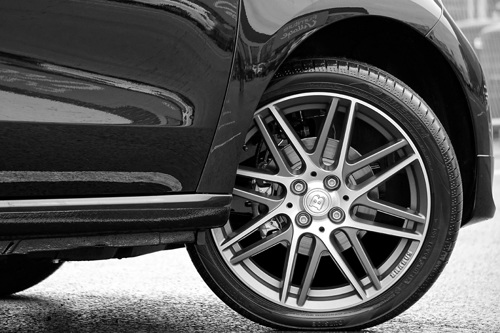
New research by the Air Quality Expert Group emphasises that while legislation has helped to reduce tailpipe pollution from internal combustion engine vehicles, the NEE proportion of traffic emissions has increased.
These account for 60% and 73% respectively of primary PM2.5 and PM10 emissions from road transport, and are set to become more dominant in the future. This means that even electric vehicles may still contribute to the release of particles that damage air quality.
Following the report’s publication on Thursday, Government is now calling for action from the automotive industry, including to support the development of standardised methods for measuring NEE particles.
Environment Minister Thérèse Coffey said: “Emissions from car exhausts have been decreasing through development of cleaner technologies and there is now a need for the car industry to find innovative ways to address the challenges of air pollution from other sources”.
Transport Minister Michael Ellis added: “We are engaging at an international level to identify how to measure these emissions as well as aiming to develop standards to control them.”
The Air Quality Expert Group’s report highlights that half of NEE occurs on urban roads, owing to the greater level of braking per kilometre.
The most effective mitigation strategies, it says, are to reduce the overall volume of traffic, lower the speed where traffic is free flowing and promote driving behaviour that reduces braking and higher speed cornering.
Some hybrid and electric vehicles also feature ‘regenerative braking’, which does not rely on friction and therefore lowers brake wear emissions. However, tyre and road wear emissions increase with vehicle mass, which has implications for battery powered vehicles.
Society of Motor Manufacturers & Traders chief executive Mike Hawes commented: “Brake, tyre and road wear is a recognised challenge as emissions from these sources are not easy to measure.
“Maintenance of the road surface, as well as further investment in new vehicle technologies, is essential to reducing these emissions, without compromising safety and we welcome further research in this area.”
Campaign for Better Transport chief executive Darren Shirley said: “The Government needs to move beyond understanding the scale of the problem to encouraging and facilitating solutions.
“It should ensure that forthcoming clean air legislation targets this problem and the automotive industry doesn't delay action.”
Alongside this, Government has also set out ambitions to see all newly installed rapid and higher powered charge points provide debit or credit card payment by spring 2020.


Join other savvy professionals just like you at CIHT. We are committed to fulfilling your professional development needs throughout your career
{{item.AuthorName}} {{item.AuthorName}} says on {{item.DateFormattedString}}: