
Today (17 November 2022) the Chancellor, Jeremy Hunt, has highlighted three major points of focus for the Budget review to help the UK strengthen its economy, protect the most vulnerable citizens and affirm its international position: stability, growth and public services. In particular, infrastructure, energy and innovation have been identified as fundamental to achieve stable and solid growth and “over the next five years over £600bn of investments will be dedicated to connect our country and grow our economy”. CIHT assess the impact for transport
Join other savvy professionals just like you at CIHT. We are committed to fulfilling your professional development needs throughout your career

In terms of climate change confirmation of commitment to reduce emissions of which transport is a large part of - EV's will pay vehicle tax from 2025
Chancellor Hunt praised the current efforts made in the sector to build, maintain, improve and digitalize the transport infrastructure and that investments should continue to ensure the levelling up of the economy.
Both Capital funding for transport infrastructure and revenue expenditure will be maintained at the levels set in the last spending review for the current three-year period up 24/25. This includes a further round of the Levelling Up Fund.
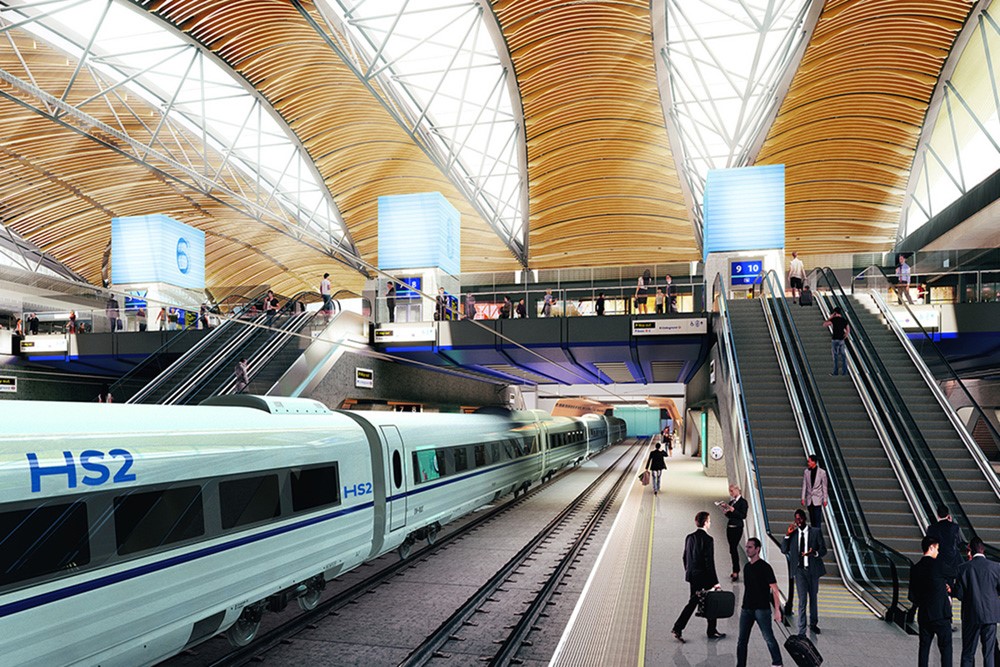
The Northern Powerhouse, HS2 and the East West Rail are confirmed to proceed.
The statement overturns the commitment made in the Growth Plan in September to progress the delivery of a number of schemes which is replaced by a wider requirement to deliver all schemes efficiently.
CIHT Comment: Whilst the continuing acceptance of the importance of infrastructure is welcome, it is not clear what the implication of inflation this year and next is on those significant capital projects and importantly how it will affect other projects across the country over the next few years, given that overall expenditure limits have been fixed.
Also worrying is the potential impact on the local highways network, which is the biggest piece of infrastructure in the UK. We are particularly concerned about the maintenance position as the Department budget for transport and what it gives to local authorities will stay at current levels and will therefore effectively significantly reduced by inflation over that period. Whilst overall local authority funding has been protected to some degree by extra funding for Social Care there is likely to be a significant downturn in the money available for both people and resources to deliver effective maintenance and services for a fundamental infrastructure service that impacts upon everyone. CIHT has called for a significant -inflation proofed fund to be created and for the network to be refocused to meet the wide range of benefits it can deliver and believe an opportunity has been missedi. CIHT looks forward to working with DfT and other bodies to mitigate the potential impact of the announcements today.
There is no indication of a future plan/strategy for transport but rather a different funding strategy for different parts of the transport network whilst the NHS will undergo a review to produce a clear plan for the next 5, 10, and 15 years. CIHT would like to see a similar review for transport infrastructure.
Chancellor confirms the UK commitments to the Glasgow agreement on climate change and to COP27.
Long-term aim is to achieve energy independence by strengthening domestic energy production through offshore wind, carbon cut and nuclear plant (Sizewell C plant in southeast of England, project to be presented) and energy efficiency
In terms of climate change confirmation of commitment to reduce emissions of which transport is a large part of - EV's will pay vehicle tax from 2025.
The government announced they will be updating National Policy Statements for transport, energy and water resources during 2023, and through sector-specific interventions.
CIHT Comment: shift to renewable energy encourages the transport sector to consider such shift as well, not only by using EV but also active travel to cut carbon emissions. At the same time, the tax on EV’s might discourage the transition. There is a need to work with the transport sector, as it is one of the main producers of CO2, to ensure the adoption of renewable energy in the sector. CIHT look forward to the update of the National Policy Statement for transport: in particular how will this policy contribute to the reduction in CO2 emissions from transport?
Chancellor announces the will to transform the UK into a science superpower and focus on research, innovation and business creation in the fields of technology, specifically AI, quantum tech and robotics. The government has announced that in the coming months technology and financial clusters projects will be developed, to create new agglomeration economies in the country.
It has been underlined that science and innovation are the UK’s greatest strengths and that research should lead the economic growth, with public spending on R&D increasing to £20bn a year by 2023-25
CIHT Comment: As great emphasis has been placed on supporting R&D and Innovation in the overall economy, CIHT supports research on climate and technological changes to be connected to the transport sector to develop innovative solutions to drive the sector towards carbon neutrality and sustainability.
For the allocation of these new clusters: when choosing sites for allocation, transport considerations should be taken into account, both in the sense of adequate current infrastructure and possibilities to develop a new one, but how? There is a need also to ensure that new eventual projects are energy efficient and do allow for growth without disrupting local communities and actively integrating them into the growth that will be spurred from the new clusters.
Chancellor Hunt has underlined the importance of investing in education and ensuring that students leave the education system with the right skills to enter the market. £3.5bn per year will be invested in education as investing in education is investing in growth. Yet, no specific skills or sectors of specializations were mentioned to direct education to support strategic sectors in the economy.
At the same time emphasis has been put on strengthening research and innovation (emerging technology, digital finance), but no connection has been made between education and R&D or Innovation.
CIHT Comment: skill development is important for the transport infrastructure and technological changes call for a pool of professionals that have the skills and knowledge to navigate the sector, this should be accounted for when investing in education and especially in STEM qualifications.
Both Capital funding for transport infrastructure and revenue expenditure will be maintained at the levels set in the last spending review for the current three-year period up 24/25
Key elements from the November 2022 Autumn Statement (extracts)
The government’s priorities are stability, growth and public services. Economic stability relies on fiscal sustainability – and the Autumn Statement sets out the government’s plan to ensure that national debt falls as a proportion of the economy over the medium term. This will reduce debt servicing costs and leave more money to invest in public services; support the Bank of England’s action to control inflation; and give businesses the stability and confidence they need to invest and grow in the UK. To achieve this aim, the government has reversed nearly all the measures in the Growth Plan 2022.
2.21 Spending Review 2021 set UK government departments’ resource and capital Departmental Expenditure Limit (DEL) budgets and the devolved administrations’ block grants from 2022-23 to 2024-25. The Autumn Statement confirms that departmental DEL budgets will be maintained at least in line with the budgets set at the Spending Review. There is no indications of any additional increase to DEL for Transport as a result of the Autumn Statement. Figures for transport are as follows.
Transport DEL (£bn)
Outturn 21/22 3.2 plans 22/23 8.3 23/24 6.8 24/25 5.7
Transport Capital DEL (£bn) Outturn 21/22 19.0 plans 22/23 19.9 23/24 19.9 24/25 20.5
2.23 To keep spending focused on the government’s priorities and help manage pressures from higher inflation, government departments will continue to identify efficiency savings in day-today budgets. To support departments to do this, the government is launching an Efficiency and Savings Review. This will include reprioritising spending away from lower-value and low-priority programmes, and reviewing the effectiveness of public bodies.
2.27 As part of the OBR forecast process, the government also provides an assumption for the future path of departmental spending. After this Spending Review period, departmental resource spending will grow at 1% a year in real terms. Departmental capital spending will continue at the same level in cash terms. As a result, total departmental spending will be over £90 billion higher in real terms by 2027-28 than it was at the start of this parliament (2019-20). DEL budgets beyond 2024-25 will be set at the next Spending Review.
Infrastructure
3.15 Investing in high quality infrastructure is crucial for boosting economic growth and productivity. Infrastructure spreads opportunity and prosperity across communities by connecting people to new jobs through faster and more reliable routes. Infrastructure is also the foundation for securing our energy independence and transitioning to net zero.
3.16 The government will seek to accelerate delivery of projects across its infrastructure portfolio, rather than focus on the list of projects that were flagged for acceleration in the Growth Plan. The government will continue to ensure that all infrastructure is delivered quickly through reforms to the planning system, including through updating National Policy Statements for transport, energy and water resources during 2023, and through sector-specific interventions.
3.17 The government is placing the UK Infrastructure Bank on a statutory footing. This will cement its status as a key institution that will facilitate long-term investment in infrastructure to tackle climate change and support regional and local growth.
3.18 The Autumn Statement recommits to the government’s transformative growth plans for our railways. These include East West Rail, core Northern Powerhouse Rail, and High Speed 2 to Manchester. These will provide fast, more reliable services and connect people to new job
3.23 The government will deliver the Levelling Up White Paper commitment to sign new ‘trailblazer’ devolution deals with Greater Manchester and the West Midlands Combined Authorities by early 2023. The government is in discussion with the mayors of these areas to devolve powers to deliver levelling up in areas such as skills, transport and housing. These ‘trailblazer’ deals will act as a blueprint for other areas to follow.
3.24 As part of negotiations on trailblazer deals, the government will explore with Greater Manchester Combined Authority and West Midlands Combined Authority the potential to provide single departmental-style settlements at the next Spending Review. This could give local partners more flexibility and accountability over key economic growth funds, moving away from competitive bidding processes. Subject to progress of these discussions, the government will consider the eligibility of other mayoral combined authorities for these settlements, noting the need to ensure appropriate accountability structures are in place.
Skills
3.8 Since leaving the European Union (EU), the government has refocused the immigration system towards securing the skilled labour businesses need to stay competitive and innovative. Over the last year a high number of visas have been issued,28 partly reflecting the UK’s action to welcome those from Ukraine and Hong Kong and international students returning after the COVID-19 pandemic. As these temporary factors ease over time, the government expects net migration to return broadly to pre-pandemic levels. The government will continue to strike the balance between reducing overall net migration in the longer term with ensuring businesses have the skills they need.
3.9 Inward migration can ease short-term skills gaps, however it is crucial that over the long term, the UK’s domestic workforce is equipped with the skills necessary to maximise their productivity and drive economic growth. Despite around 50% of adults being educated at tertiary level, the UK underperforms on basic and technical skills compared to similar developed countries.29
3.10 That is why the government is taking steps to ensure the education system provides the skills current and future employers need, for example through T-Levels, Higher Technical Qualifications, Skills Bootcamps and Apprenticeships.
4.14 The OBR expects inflation to peak at 11.1% in Q4 2022, compared with the peak of 8.7% in its March forecast.64 The OBR expects inflation to then fall over 2023 to 3.8% in Q4 2023 and to fall below the 2% target by Q2 2024. Inflation then turns negative between Q3 2024 and Q2 2026 as energy and food prices fall.


Join other savvy professionals just like you at CIHT. We are committed to fulfilling your professional development needs throughout your career

{{item.AuthorName}} {{item.AuthorName}} says on {{item.DateFormattedString}}: