
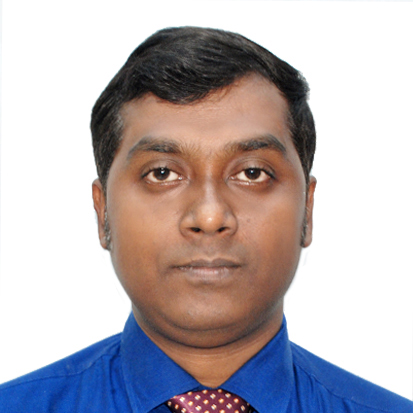
A top Indian professional on his country's legendary engineer Sir Mokshagundam Visvesvaraya. By Barun Halder MCIHT MSoRSA CEng (I) MIE
Join other savvy professionals just like you at CIHT. We are committed to fulfilling your professional development needs throughout your career
Like many engineers in India, my hero is Sir Mokshagundam Visvesvaraya, whose birthday is celebrated in my country as Engineers Day. He was a great engineer. When Jawaharlal Nehru, our first prime minister, started to build India’s infrastructure after the country gained independence, he was one of the major influences.
Enjoying work is important
Sir Mokshagundam Visvesvaraya worked on a wide variety of projects, from irrigation and water supply to railway and public works projects. As an Indian, we all admire him as a historical figure, especially his values and how he solved difficult issues. Today, we try to follow his ethics and problem-solving process in our work: if we are doing something, we should do it with total honesty. He also impressed on us as engineers that we should enjoy our work, because that also helps with problem solving.
Apart from him, my heroes are my mentors. I started my professional career under some very good engineers in India and beyond. For example, I used to work as a consultant in a World Bank project under the supervision of Suvendu Seth. He had a masters in transportation engineering and he guided me along a similar path. He mentored me in transport economics and traffic engineering, helping me to understand how to solve the financial analysis of a project, how we start a project, think about how we can calculate the internal rate of return or net present value (NPV) of a project and updating my knowledge of HDM-4 software.
After that, I received a lot of help from another engineer, Arshad Khan from London, when we worked together on projects in Doha. He taught me a lot about road safety engineering and road safety auditing. Even when I returned to India, he continued to offer help and technical support.
I will always admire these two engineers. Not only did they support me with my career, but they support all their juniors and are trying to build a community with value engineering at its core.
Road safety rejections
I started my career with a BTech in civil engineering, followed by a masters degree in transportation engineering from the Indian Institute of Technology Kharagpur in 2008. After that, I started working as a traffic engineer on a road management system project. Road management is now a growing field in India, but it wasn’t in 2008, when I started my career.
I want to work more in transport planning, but there is a real shortage of people who know the latest software and can pass on that information to those of us who want to learn how to use it. That’s a major challenge for us.
Another challenge is road safety, which is a new thing in India. We’ve had a Road Safety Manual since 2012, but it was very general in scope, so it’s recently been updated to incorporate new engineering designs, more choices, new kinds of traffic movement, new technologies and even the new types of car that are being introduced to our roads. There are still improvements to be made, though: I can make road safety recommendations, but authorities can reject them if they slow a project down, for example, so there’s still some progress to be made in this area.
Barun Halder has 13 years post masters’ experience in transportation engineering and works on road safety audits, traffic engineering, ITS design, traffic management, as well as transport planning related projects. Based in Kolkata, India, he was in conversation with Craig Thomas.
Working on road safety audits? Apply to join SoRSA, the home of professional highways safety auditing best practice.


Join other savvy professionals just like you at CIHT. We are committed to fulfilling your professional development needs throughout your career
{{item.AuthorName}} {{item.AuthorName}} says on {{item.DateFormattedString}}: