
Plans to tackle air pollution in Bristol have been criticised for a lack of urgency after it emerged that nitrogen dioxide levels in some parts of the city are not expected to fall below legal limits until 2025.
Join other savvy professionals just like you at CIHT. We are committed to fulfilling your professional development needs throughout your career
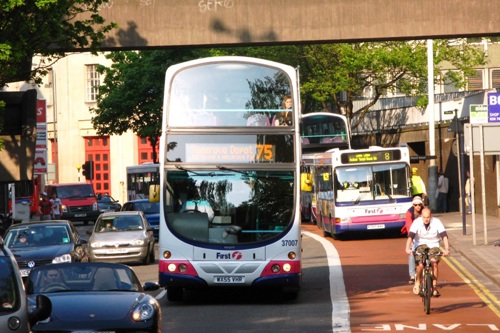
Bristol’s clean air zone proposals – which went before the city council’s cabinet this week – include a small area diesel ban for private cars and a wider class D charging zone for non-compliant commercial vehicles such as buses, taxis and HGVs.
Law firm ClientEarth’s clean air lawyer Katie Nield welcomed the plans as a step in the right direction but said they “stop short of ridding the city of its illegally toxic air with the necessary urgency”.
She added: “It is not right that people in Bristol will have to wait until 2025 to breathe cleaner air when cities across the country are doing it much sooner.”
Bristol’s plans also include a car scrappage scheme and further measures are suggested to improve or prioritise public transport options. Responding to ClientEarth’s criticism, a council spokesman emphasised that the majority of streets will reach compliance well before 2025.
Mayor of Bristol Marvin Rees said: “These ambitious plans demonstrate our commitment to tackling air pollution so we meet legal limits within the shortest time, without disproportionally affecting citizens on lower incomes which would happen with a blanket approach to charging vehicles.”
A full business case for the plans is expected to be submitted next year, with the deadline for implementation being March 2021.
Campaign group the Bristol Clean Air Alliance broadly welcomed the council’s plans and described the diesel ban area as “more radical than the charging zones that other cities are implementing”.
Alliance member Alan Morris told TP Weekly News: “What is proposed is a strong scheme.” But he emphasised that he would have preferred a class C clean air zone – to include cars – and expressed concern at the expected 2025 compliance date which is significantly later than many other cities.
“Bristol seems to have a problem with a few particular streets,” he explained, which prevent the city from meeting legal NO2 limits earlier.
Also this week, Transport Secretary Grant Shapps has written to local authorities urging them to take advantage of funding available to build up their electric car charging infrastructure.
This comes after the Department for Transport published a league table of data illustrating charger availability across the country, which shows there are over 100 authorities with fewer than 10 public charging devices per 100,000 population.
Chancellor of the Exchequer Sajid Javid has also launched a Net Zero Review into how the UK can end its contribution to global warming while maximising economic growth opportunities. A final report will be published in autumn 2020.
(Photograph: Geof Sheppard and licensed for reuse under this Creative Commons Licence)


Join other savvy professionals just like you at CIHT. We are committed to fulfilling your professional development needs throughout your career
{{item.AuthorName}} {{item.AuthorName}} says on {{item.DateFormattedString}}: