
Political parties are showing fresh impetus on major infrastructure investment but planning procedures and short term thinking currently make it difficult for the UK to deliver key projects, a Liberal Democrat Peer has said.
Join other savvy professionals just like you at CIHT. We are committed to fulfilling your professional development needs throughout your career
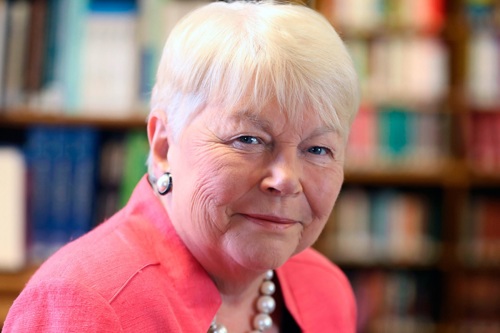
Baroness Jenny Randerson told the Movement Matters seminar in London last week that, in recent election pledges, politicians have “at last woken up after decades of underinvestment where we have not kept pace with rising population, advancing technology and with concerns on climate change”.
“Overall the picture is that the days of austerity are gone and every main party has signalled major investment in infrastructure,” she said. But she warned that the country finds itself in “a very bad place” where large projects struggle to get off the ground.
“There are exceptional time delays between inception of the idea and actually getting the work started,” she told the event organised by consultant Steer, giving Heathrow’s third runway and High Speed 2 as key examples.
These delays, she explained, are often blamed on the planning system and lengthy political debate. “As a firm believer in democracy, I think that we have got to the point with our democratic process on these things where they are so unwieldy that it is in itself undemocratic, because of the huge delays and lengthy uncertainties.
“If you combine this system with the frustrating short termism of the political cycle, you get a problem.”
The Baroness emphasised that the National Infrastructure Commission was established to help overcome this problem but has not been given the powers or the budget to follow through in its research and vision.
She added that Brexit has proven an “unwelcome” distraction for Government, civil servants and Parliament and also called for more robust public-private partnership models to ensure better project delivery.
This could see the Government play more of a role in the initiation and direction of projects, with larger involvement by local authorities and greater powers for organisations like Transport for the North.
“Increasingly I think private sector investment will be expected to follow public sector ambitions, and the public sector will be expected to maintain private standards and expectations in terms of efficiency and detailed project specification,” she added.
“The public sector has got to work to the high standards that the private sector expects before it starts a new project. That will mean no more Garden Bridges, let alone a bridge between Wales and Ireland.”
Today, the Conservative party pledged to introduce a £4.2Bn local public transport fund if it forms the next majority Government, focused on eight mayoral or Combined Authority areas mainly in the north of England.
But it points out that the power and money given to each region would vary depending on their ‘need, capacity and vision’ and said that each area would be obliged to raise further sums locally. Light rail or tram schemes in West Yorkshire, Greater Manchester and the North East are among projects listed by the party that could benefit from the fund.
But the Liberal Democrats’ spokesman for the north John Leech described the announcement as “desperate bait for Northern votes”. And Labour’s shadow transport secretary Andy McDonald said the news was a "pathetic attempt" to cover up Government's failure to invest in public transport.
(Photograph: Cardiff University)


Join other savvy professionals just like you at CIHT. We are committed to fulfilling your professional development needs throughout your career
{{item.AuthorName}} {{item.AuthorName}} says on {{item.DateFormattedString}}: