
Major projects must guard against ‘group think’, being overly optimistic about hitting deadlines and pointing the finger when things go wrong, a senior civil servant has remarked.
Join other savvy professionals just like you at CIHT. We are committed to fulfilling your professional development needs throughout your career
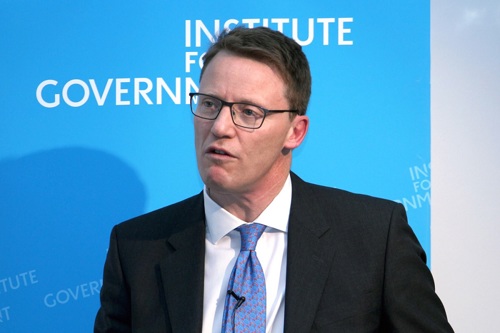
Matthew Vickerstaff, the Infrastructure & Projects Authority’s interim chief executive, told an audience on Thursday that when it comes to project delivery, having the right behaviours and cultures are more important than processes.
“Group think or a blind commitment to succeed can definitely lead to the wrong behaviours and decisions on major projects,” he told a meeting of the Institute for Government. “The most important thing is transparency and a change in behaviour, especially where multiple stakeholders are involved.”
He also warned against so called ‘optimism bias’ among those on a project in believing schedules can be achieved or recovered when they can not.
“We have all been on a major project where there is a major elephant in the room and something doesn’t feel right.” Cultures need to change, he added, so that contractors can feel able to admit to clients if they feel they cannot catch up easily on a delayed scheme, by “raising the red flag and saying they need to reset or apply more resources to catch up”.
“Delivering projects requires a heroic effort from all involved,” he added. “While it is tempting to point the finger at a person or people” when things go awry, “the reality is there are no easy fixes or silver bullets; we have to get the basics right and learn lessons.”
Matthew said that more efforts are needed to establish “conditions for success” at the start of projects. “We need to invest in people and attract them to the construction industry that for too long has been associated with concrete and diggers. We need to upskill people involved in the delivery of projects.”
But he said that delays to Crossrail and cost escalations on High Speed 2 also represent opportunities for lessons to be learned from what has gone before, to help transform project delivery across Government.
He also encouraged project leaders to engage in ‘hindsight bias’ to think through what they may have done differently on their scheme after it has completed.
Matthew also said that Britain’s likely exit from the European Union will “continue to present some interesting challenges” but said that “the complexity of Brexit is making us think through delivery problems in different ways and forcing Government to be better joined up across departments and functions. This will only increase.“
He was asked by the London School of Economics professor Tony Travers what role the Infrastructure & Projects Authority has to guide High Speed 2, which he noted is costing “a very large amount of money”.
Matthew replied: “There is no open chequebook for HS2. They are working with their suppliers on how can they can rework and improve the likely overall landing point. We will continue to work with them, check in from time to time and try to ensure the project is delivered as well as it can be.”
He went on: “I actually think we (in the UK) are very good at delivering projects; the high water mark was the Olympics. Crossrail has been incredible from a civil engineering perspective and countries look at us and say these guys know what they are doing. We must be careful about not beating ourselves up too much.
“I’m really confident that when complete, Crossrail will be seen as a resounding success and a top tier piece of infrastructure globally. Yes, projects of that complexity are difficult to deliver. Perhaps setting a date at the outset rather than asking how long it would take to deliver is something to reflect upon.”


Join other savvy professionals just like you at CIHT. We are committed to fulfilling your professional development needs throughout your career
{{item.AuthorName}} {{item.AuthorName}} says on {{item.DateFormattedString}}: