
Government should reinstate the fuel duty ‘escalator’ and spend some of the additional tax revenue on funding sustainable transport measures, an event has heard.
Join other savvy professionals just like you at CIHT. We are committed to fulfilling your professional development needs throughout your career
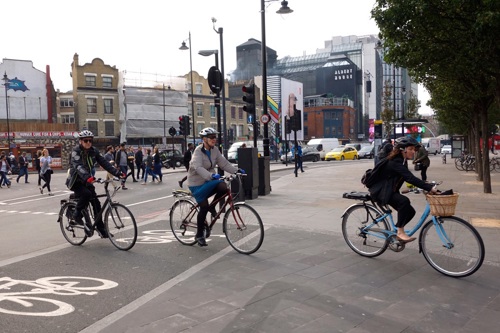
London Borough of Waltham Forest councillor Clyde Loakes told the Liveable Neighbourhoods Conference that £46Bn has been lost to the Treasury since the escalator was abolished at the turn of the century. “Imagine the injection of cash that could bring for walking and cycling,” he said.
Speaking later to TP Weekly News, he acknowledged it was highly unlikely that active travel would ever receive such a generous level of funding. But he added: “If we unfreeze the fuel duty escalator, you could certainly put a decent chunk of it into encouraging, promoting and building infrastructure that supports active travel in a way that has not been seen in this country.”
Councillor Loakes spoke up at the conference for initiatives such as ‘Mini Hollands’ which promote sustainable travel interventions and discourage private vehicle use. “The Mini Hollands agenda has transformed people’s lives, improved air quality and health outcomes and handed back areas to residents in a way that no other public scheme has done in Waltham Forest,” he said.
Speakers were asked for their thoughts on the best ways to convince doubtful local people that introducing ‘liveable neighbourhoods’ in their areas and reducing the dominance of private vehicles are worthwhile aims.
“Try to engage with as many people as possible and do not frame the conversation in terms of it being about traffic management,” replied Clyde, who cited a local scheme in Francis Road where residents tend to a ‘pocket park’ and a project to limit vehicles on Orford Road which, he says, helps local businesses.
London Borough of Enfield councillor Daniel Anderson said that many people do not know what they want and it is better to present them with a vision. “Steve Jobs produced the iPad and people bought the iPad,” he remarked.
“Most people are neutral and some are slightly cynical (of change). But if you are trying to engage with the doomsayers you are wasting your time. Over time, most people will buy into something and be happy.” He added that officials presenting the case for an improved street scene “have to go back to basics and be very clear about what they are doing, otherwise you are on shaky foundations and you may falter.”
The key, Daniel added, is to involve different parts of the council and view changes to the highway as being about more than just a transport initiative.
Living Streets chief executive Joe Irwin told the conference that the best way to bring about a change of mindset when it comes to streets is to emphasise the wider community benefits of doing so. “If people do not like motorists rat running through their area, that is where you can get buy in. Ordinary people can become community leaders and be the best champions you can have.” He added that not every champion of active travel has to be a recognised figure, such as walking and cycling commissioners Chris Boardman or Will Norman.
London Cycling Campaign co-ordinator Fran Graham commented that changing mindsets can be tricky. “Most people think cycling has a positive impact in London, want to feel safer and for air quality to improve but people get nervous about change. I cannot overstate the importance of consultation and engagement.”
Tower Hamlets, Camden and Waltham Forest are said to be rapidly progressing schemes to cut car use and improve walking and cycling, whereas others like Kensington & Chelsea and Havering are said to be some way behind.
To read the report click here: bit.ly/2XKvD7A
(Photograph: Alastair Lloyd)


Join other savvy professionals just like you at CIHT. We are committed to fulfilling your professional development needs throughout your career
{{item.AuthorName}} {{item.AuthorName}} says on {{item.DateFormattedString}}: