
Transportation providers may in future be required to allow passengers to carbon offset their journeys, it has been revealed by the Chancellor of the Exchequer who delivered his Spring Statement in Parliament today.
Join other savvy professionals just like you at CIHT. We are committed to fulfilling your professional development needs throughout your career
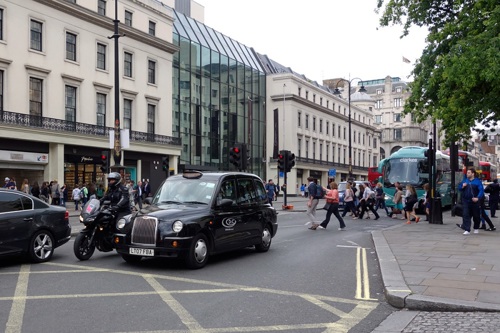
Philip Hammond said the Government will launch a call for evidence on offsetting transport emissions to explore consumer understanding of the pollution from their journeys.
The announcement comes in the same week that Public Health England has recommended a number of measures to tackle pollution, including the introduction of anti-idling vehicle enforcement near schools and redesigning cities so people are less exposed to busy roads.
The agency published a review of evidence on how to improve the UK’s air quality on Monday, urging the adoption of a ‘net health gain’ principle in any new development or change to existing developments.
“We recommend that at a local level, any new policy or programme of work which affects air pollution should aim to deliver an overall benefit to the public’s health,” said the organisation’s director of health protection Professor Paul Cosford.
“Transport and urban planners will need to work together, with others involved in air pollution to ensure that new initiatives have a positive impact.”
The report also encourages the promotion of low emission vehicles while reducing demand for more polluting forms of transport through interventions such as clean air zones, the development of electric vehicle charging infrastructure and boosting investment in clean public transport, cycling and walking.
A joined up spatial planning and transport strategy, the review emphasises, is one of the most effective ways of increasing public transport use and active travel and reducing emissions from existing vehicles over time.
British Lung Foundation chief executive Dr Penny Woods welcomed the review’s focus on improving air quality for children. “Air pollution is a danger to everyone’s health, and children are among those most at risk,” she said. “It’s clear we need action now, so we welcome the suggestion to ban idling cars outside school gates.
“Millions of people are still exposed to illegal and harmful levels of pollution, and we now need the Government to ensure it supports local authorities in adopting driving restrictions and local congestion charging schemes,” she added.
Living Streets head of policy Tanya Braun said: “We strongly agree with the report’s recommendations that the interventions which stand to have the greatest impact are those which reduce emissions of air pollution at source.”
She called for action by local authorities to make it easier for families to walk to school, including 20mph limits, car free zones and behaviour change initiatives.
Also this week, five legal challenges against the Government’s decision to back plans for a third runway at Heathrow Airport have started to be heard in the High Court. Primary concerns are over the expanded airport’s impact on air quality, climate change, noise and congestion.
In addition he reiterated the Government’s commitment to publishing a National Infrastructure Strategy and emphasised the importance of the £37Bn National Productivity Investment Fund – previously announced – in boosting the economy.
Publication of a Future of Mobility Urban Strategy was also announced setting out the Government’s approach to significant changes taking place in transport technology, including electric and self driving vehicles.
(Photograph: Alastair Lloyd)


Join other savvy professionals just like you at CIHT. We are committed to fulfilling your professional development needs throughout your career
{{item.AuthorName}} {{item.AuthorName}} says on {{item.DateFormattedString}}: