
The Chartered Institution of Highways & Transportation (CIHT) brought the challenge of climate change and its implications for transport to the forefront at Futurebuild 2026, hosting a session titled Climates: Impact on Transport.
Join other savvy professionals just like you at CIHT. We are committed to fulfilling your professional development needs throughout your career
Held on 12 May 2026 at Excel London, the session—available here: View session details—highlighted CIHT’s growing body of work on climate action, focusing on both decarbonisation and resilience across transport networks.
Chaired by Justin Ward, CIHT Head of Policy and Technical Practice, the session brought together leading industry voices including Juan Sebastián Cañavera Herrera, Senior Sustainability Engineer at Foster + Partners, and Dr Kim Yates, Director – Climate Change and Sustainability at Mott MacDonald.
The session formed part of CIHT’s wider CLIMATES initiative – Changing Landscapes for Infrastructure and Mobility: Assessing Transport and Environment Scenarios – which seeks to define how the sector should respond to climate change in the short and long term.
As set out in CIHT CLIMATES resource, the initiative is built around a central question:
In an uncertain world, what priority actions in highways and transportation should we double-down on in the next three years?
The programme highlights two defining challenges for transport professionals:
These themes were central to the Futurebuild session, which explored how climate impacts are already affecting transport systems and what practical actions can be taken now.
Drawing on the session insights presented by the CIHT speakers emphasised that climate change is unavoidable, with outcomes ranging from manageable to severe depending on global action.
The discussion reinforced the need for a dual approach to climate action:
The session also highlighted that resilience must be understood broadly. It is not simply about protecting assets, but about ensuring systems can resist, absorb, adapt and recover from shocks, reflecting internationally recognised definitions of resilience.
Juan Sebastián Cañavera Herrera focused on how transport infrastructure must be understood as part of complex socio‑technical systems, where climate risks are interconnected across sectors.
Using a systems thinking approach, he demonstrated how climate hazards such as flooding, heat and storms can create cascading risks, including:
The presentation highlighted the importance of:
Key messages included the need to move beyond isolated interventions and adopt a system-wide response to climate risk.
Dr Kim Yates explored how the delivery of transport services is intrinsically linked to climate conditions, with impacts across:
Her presentation emphasised that a well-adapting transport system should:
The session also introduced approaches such as:
The session reinforced a number of practical priorities aligned with CIHT’s wider policy work, including:
These echo key recommendations from CIHT’s CLIMATES work and wider resilience guidance, which call for urgent and coordinated action across government, industry and professional bodies.
Futurebuild 2026 provided an important platform for CIHT to bring its CLIMATES insights to a wider audience across the built environment.
The session demonstrated that addressing climate change is not a single-issue challenge, but one that requires:
As the CLIMATES initiative shows, the transport sector has a critical role to play in both reducing emissions and enabling resilient, sustainable futures.
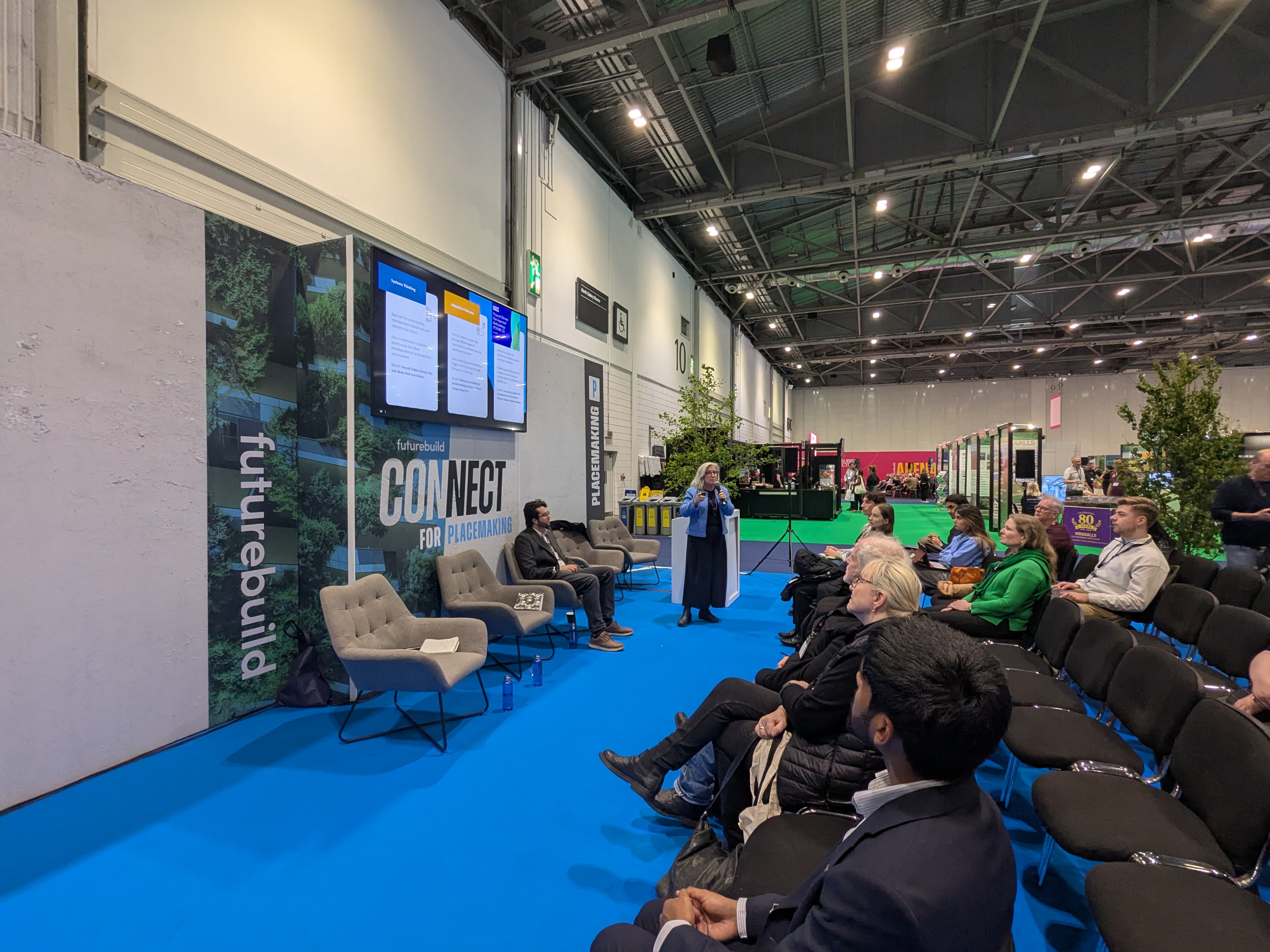
CIHT presenting at Futurebuild 2026


Join other savvy professionals just like you at CIHT. We are committed to fulfilling your professional development needs throughout your career
{{item.AuthorName}} {{item.AuthorName}} says on {{item.DateFormattedString}}: