
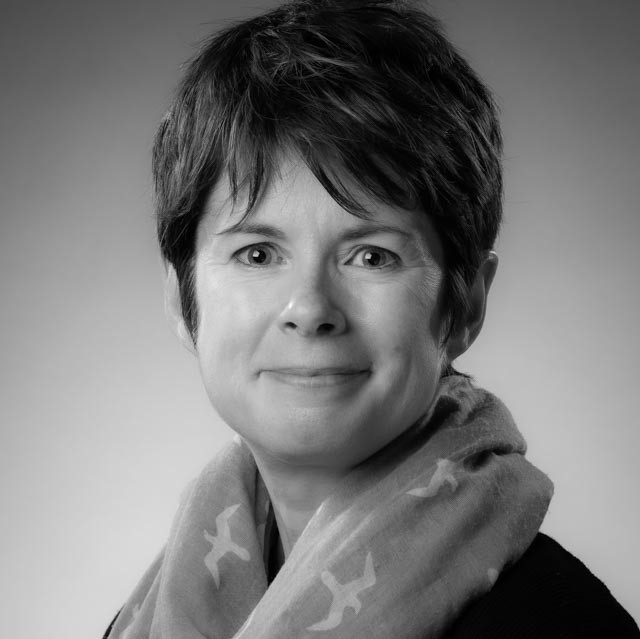
Professor Lorraine Whitmarsh MBE is a British psychologist and environmental scientist at the University of Bath. She serves as Director of the Centre for Climate Change and Social Transformations
Professor Lorraine Whitmarsh, environmental scientist at the University of Bath, says that transport professionals must focus on ‘upstream’ behaviour interventions to make progress on decarbonisation.
Join other savvy professionals just like you at CIHT. We are committed to fulfilling your professional development needs throughout your career
A lot of our behaviours are habitual – and that is certainly true when it comes to travel. For example, we don't often weigh up the different options for getting to work, we'll always go the same way.
Habits are really difficult to break, because they are unconscious routines that we get into. The key to breaking them is to change the context around us.
One of the ways we can best change people's travel habits, is to look at very specific elements. For example, the bus we could get to work, or the specific route we could walk, instead of driving. The more specific we are in our plans, the better and the more chance of behaviour change.
The Government’s Transport Decarbonisation plan underplayed the role of behaviour change. It was almost as if there was a desire not to change people's lifestyles, because it might be unpopular; that behaviour change was almost equated with sacrifice. That’s problematic because we know a lot of the changes we need to make to reach net zero will have wider benefits for people. It will improve health, help decarbonisation of transport and improve the rollout of electric vehicles.
We should be looking more closely at the sustainable transport hierarchy of avoid, shift and improve. Essentially: avoiding the need to travel in the first place; shift to a less damaging mode of transport and improve technologies such as electric vehicles. There are co-benefits to all of the levels in the hierarchy, but also potential for behaviour change. You need people to actually choose those technologies and we certainly need behaviour change when we're getting people out of cars and onto buses and bikes.
We looked at this shift in transport modes in the review of the government’s Future of Mobility report, specifically, what shapes our choice to travel by bike, car, bus, or other mode of transport. We also examined what decides people's choice of vehicle and their car ownership decisions. Subsequently, we identified four main factors: conscious motivations; influences from friends and family; social demographic factors (such as income and household size) and, finally, the physical and transport environment. The last factor is the largest one because it takes into consideration whether there are appealing and safe ways where people can walk and cycle and also the availability of public transport services. All four factors interact and, together, shape our behaviour.
There are two types of behaviour change intervention in transport that can make a difference: upstream and downstream. Upstream is where you're trying to shape the environment in which people act. So that captures everything from economic incentives to physical measures to reallocating road space from cars to more active and public modes. Downstream measures are more information-based. Very often they’re where you're trying to actually shape the individual's decision-making directly. For example, adverts or information campaigns would fall into that category.
From our research, we know that downstream measures are quite popular because they tend to be low cost and you don't restrict people’s options. However, they only tend to change behaviour by about 3%. However, the upstream approach is generally much more effective, sometimes having as much as a 90% effect on behaviour change.
In many cases, you need a combination of both. So, you want some information to raise awareness about alternative ways of travel, but also need some economic incentives – such as congestion charge or a workplace levy. In some cases, physical or regulatory measures can also help.
Citizen assemblies are often an effective mechanism to address behaviour change, especially around climate issues. I've been involved in a number of them and transport is often one of the topics that we've been looking at. They work really well at a local level because it adds specific context to the exact area.
There are obviously huge differences between transport networks in rural and urban areas, but also between different towns and cities. So you really need to work at that local level to understand the issues people are concerned about in their area. Whether it’s air pollution, road or accessibility, once you've identified them, you can work within the community to address those concerns
Professor Lorraine Whitmarsh MBE is a British psychologist and environmental scientist at the University of Bath. She serves as Director of the Centre for Climate Change and Social Transformations.
To hear more from Professor Whitmarsh on how behavioural science can shape transportation decision-making,check out this CIHT podcast.
(Banner Photograph: Shutterstock)


Join other savvy professionals just like you at CIHT. We are committed to fulfilling your professional development needs throughout your career
{{item.AuthorName}} {{item.AuthorName}} says on {{item.DateFormattedString}}: