
New flood policy must be introduced by the next Government to help prevent repeats of the major disruption to settlements and transport networks that followed extreme rainfall in recent weeks, drainage specialists urge.
Join other savvy professionals just like you at CIHT. We are committed to fulfilling your professional development needs throughout your career
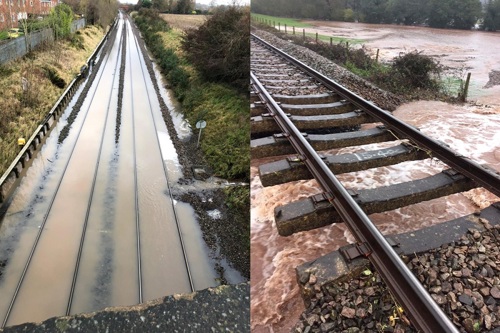
South Yorkshire and the East Midlands have been among the regions worst affected by flooding this month.
A major incident was declared in Sheffield which saw road closures and the closure of rail routes between the city and Doncaster, including via Rotherham. Transport services in Nottingham were also severely disrupted and a railway between Long Eaton and Derby had to be closed.
This came after the line between Abergevenny and Hereford shut for a week at the end of October due to extreme rain and flooding in South Herefordshire.
The Association of Drainage Authorities has called for a fundamental shift in the Government’s approach to dealing with flood risk and water management, including policy and funding structures to support the maintenance of lowland watercourses.
It also urges the next Government to ensure sustainable drainage systems are maintained over the lifetime of future developments, in order to keep pace with climate change challenges.
The group warns that a lack of conveyance and resilient embankments on key stretches of lowland river – such as the River Don which caused much of the disruption in Sheffield – leaves rural communities, farms and villages undefended against flooding.
Their maintenance, it adds, must involve more than just dredging. “Conveyance in our lowland rivers is a broader topic than simply dredging,” said the ADA’s technical manager Ian Moodie. “It also includes controlling aquatic plants and bushes growing in the river and maintaining bank condition.”
He called on local authority internal drainage boards to work in partnership with other councils and partners to remove targeted constructions in rivers in a “considered and targeted manner”.
The group adds that better maintenance approaches must form part of a ‘total catchment’ approach to flood resilience, working alongside traditional defences, good soil management and attenuating and storing floodwater.
(Photograph: Network Rail)


Join other savvy professionals just like you at CIHT. We are committed to fulfilling your professional development needs throughout your career
{{item.AuthorName}} {{item.AuthorName}} says on {{item.DateFormattedString}}: