
The latest CIHT podcast brings together leading voices from across the highways and transportation sector to explore one of the most urgent issues facing the profession today: the shift from risk to resilience. Recorded ahead of the CIHT National Conference on 18 March in London, the discussion features CIHT President Mitesh Solanki, climate resilience expert John Lamb, and Ringway’s resilience lead Simon Butt, with Justin Ward, CIHT Head of Policy and Technical Practice, hosting.
Join other savvy professionals just like you at CIHT. We are committed to fulfilling your professional development needs throughout your career
We are already in it — we’re living in the impacts of climate change. We need to understand how we react and respond to protect the communities we serve
John Lamb, Chair of the CIHT Adaptation, Biodiversity and Climate Change Board and long-standing contributor to the World Road Association (PIARC), reflected on how global experiences mirror those in the UK.
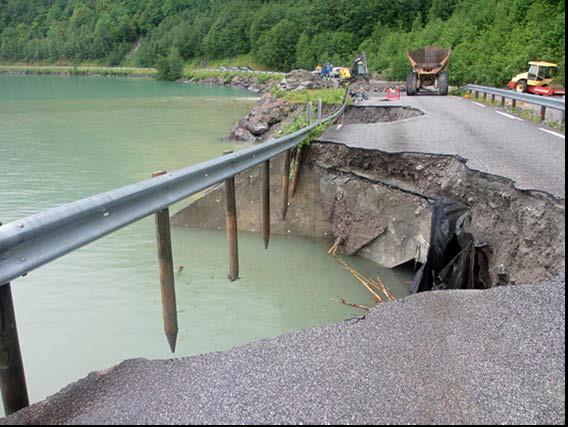
He cited storms in Canada, Belgium, Germany and Spain, all showing similar patterns: intense rainfall, major infrastructure loss, and significant impacts on communities and economies.
What we see overseas is now happening here — often with even smaller volumes of rainfall overwhelming our Victorian infrastructure
Simon Butt shared insights from Ringway’s response to Storm Goretti, a recent snow and wind event that caused significant disruption. He explained how planned‑reactive operations, resource sharing across regions, and strong supply chain links enabled effective incident management.
The conversation also touched on real‑world examples, including:
Both Butt and Solanki reinforced the importance of collaboration, mutual aid, and sharing operational learning across organisations.
A significant focus of the discussion was the work CIHT and the UK Roads Leadership Group are undertaking to produce a practical resilience guide for local authorities.
This new framework aims to help councils:
A draft is expected for consultation in summer 2026.
The speakers also discussed how resilient design does not always mean “building more,” but often “building differently.”
Solanki highlighted an example from Bradford’s Transforming Cities Fund scheme, where upgraded SuDS features protected key areas from flooding during a severe rain event — even as surrounding districts experienced significant impacts.
This aligns with broader “sponge city” thinking, where green infrastructure supports both water management and place‑making.
You must learn to swim before you fall overboard. CIHT is helping the sector get ready — not after the next storm, but now


Join other savvy professionals just like you at CIHT. We are committed to fulfilling your professional development needs throughout your career
{{item.AuthorName}} {{item.AuthorName}} says on {{item.DateFormattedString}}: