
Road safety specialists have welcomed ambitions to explore the use of graduated driver licencing (GDL) for young motorists as part of an action plan revealed by the Department for Transport to reduce casualties.
Join other savvy professionals just like you at CIHT. We are committed to fulfilling your professional development needs throughout your career
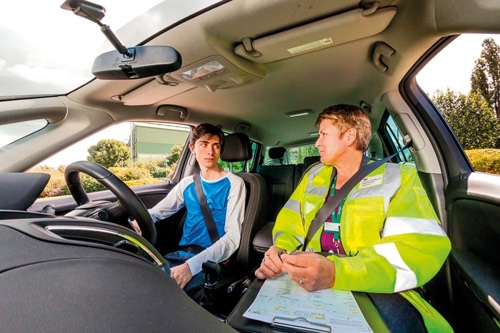
It said it would look further at the benefits of the measure, which could include a minimum learning period and restrictions on night time driving, carrying passengers below a certain age and a lower drink drive limit to help reduce new driver crashes.
Responding to the announcement, RAC head of roads policy Nicholas Lyes said: “Young drivers sadly are overrepresented in road traffic collisions so we welcome plans to improve their safety.
“Graduated driver licensing has the benefit of providing a more controlled environment when learning how to drive, however this must be balanced so it does not disadvantage young drivers who need to use vehicles for night work.”
He also encouraged the Government to look at providing incentives for the uptake of telematics based policies for new drivers, and consider how any new rules can be effectively enforced.
Road safety charity Brake’s director of campaigns Joshua Harris said: “We must improve young drivers’ safety and this starts with making licensing more robust, so that when a young driver passes their test, they have all the necessary tools and knowledge to drive safely on all roads and in all conditions.
“We have long called for the introduction of graduated driver licensing, a solution which we know works,” he added, but urged “swift and decisive action” to introduce the policy.
IAM RoadSmart director of policy and research Neil Greig said: “We strongly support many of the key components of a successful GDL scheme, in particular the 12 month minimum learning period which will ensure a much wider range of driving experience, but we still need to be convinced that night time curfews will work and support a pilot scheme first.
“Gaining the right experience behind the wheel is the key to a lifetime of safe driving; restricting the opportunity to learn how to drive safely at night seems counterintuitive.”
Further measures set out in the Department’s road safety action plan include increasing penalties for drivers who fail to wear a seatbelt, commissioning research into whether mobile phone use among young pedestrians leads to an increased risk of road collisions, and setting up a Rural Road Users Advisory Panel to explore how to boost safety in rural areas.
Government is also investigating whether ‘alcolocks’ – which measure the alcohol in a driver’s breath and stop a vehicle from starting if the level is too high – can reduce drink driving reoffending, and is undertaking a project with the RAC Foundation to examine if there is a business case for a Road Collision Investigation Branch.
(Photograph: DVSA)


Join other savvy professionals just like you at CIHT. We are committed to fulfilling your professional development needs throughout your career
{{item.AuthorName}} {{item.AuthorName}} says on {{item.DateFormattedString}}: