
How can ancient Greek myths shape the cities of tomorrow? Former CIHT President Andreas Markides shares lessons from history, personal resilience, and pioneering European examples to show why placemaking, sustainability, and collaboration are key to creating happier, thriving communities.
Join other savvy professionals just like you at CIHT. We are committed to fulfilling your professional development needs throughout your career
In a thought-provoking episode of Transport Talks, Justin Ward of CIHT sat down with former CIHT President Andreas Markides to explore an unexpected connection: how ancient Greek mythology can inform modern transport and urban planning.
CIHT podcast 'Transport Talks' is available from a range of platforms, so search for your platform. The episode can be found directly on the following:


Markides, author of Urban Myths, reflected on his personal journey from a refugee in Cyprus to a leading voice in placemaking. His experience of displacement shaped his belief in the importance of creating environments that foster human happiness and resilience. “The place you grow up in marks you for life,” he said, emphasizing that good design and strong communities are essential for flourishing societies.
Drawing on Greek myths, Markides highlighted timeless lessons. The story of Persephone, symbolizing renewal and the seasons, inspired his call for sustainable urban environments that embrace nature and change. Similarly, the myth of Pandora’s box, often associated with calamity, ends with hope—a message Markides believes is vital for today’s planners facing climate and social challenges.
The conversation also spotlighted real-world examples. Freiburg, Germany, was praised for pioneering sustainability decades before it became mainstream, rejecting nuclear power and investing in green infrastructure. Eindhoven, Netherlands, demonstrated how partnerships and a commitment to quality revived a city after economic collapse.
Markides warned against complacency, invoking Plato’s Atlantis as a cautionary tale about hubris and environmental neglect. “Are we ignoring warnings just as the Athenians did?” he asked, citing modern crises like deforestation and climate change.
Looking ahead, Markides is working on a new book, Words, exploring the Greek roots of English vocabulary—a testament to his passion for language and culture.
The episode underscored a powerful message: breaking down professional silos and embracing creativity, collaboration, and lessons from history can help build better, happier places. As Markides concluded, “Our aim as engineers, planners, and architects is to create communities of happy people. That’s what leads to civilizations.”
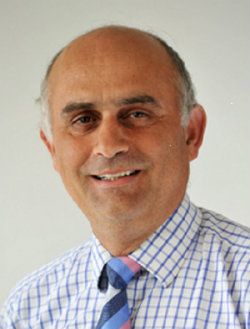
Picture of Andreas Markides


Join other savvy professionals just like you at CIHT. We are committed to fulfilling your professional development needs throughout your career
{{item.AuthorName}} {{item.AuthorName}} says on {{item.DateFormattedString}}: