
Moves to curb private car use in urban centres can help to boost declining footfall on high streets but may not be possible – or indeed necessary – in every town, an event has heard.
Join other savvy professionals just like you at CIHT. We are committed to fulfilling your professional development needs throughout your career
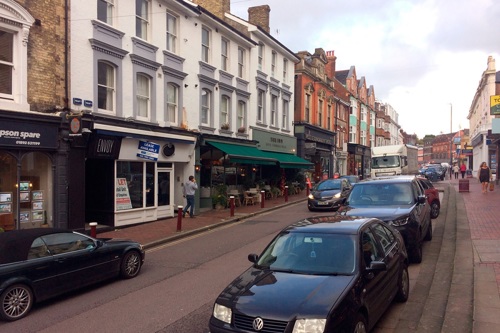
AECOM’s associate director for economic development Ilias Drivylas told the Future for Town Regeneration & Investment conference that removing cars from town centres has been proven to aid regeneration efforts.
“However it only works well if there is a good alternative in terms of public transport, especially in some of the smaller town centres where the provision isn’t really there.
“There is also a cultural hurdle,” he added, which prevents many people from taking up cycling for example. “We have to change attitudes and provide the public transport alternatives as well.”
Meanwhile the Mayor of Roeselare in Belgium Dr Kris Declercq told the event that his town has successfully brought footfall back to its central shopping streets while maintaining the place of the car.
Roeselare’s town centre regeneration plan included accessibility measures such as widening streets, increasing space for cycling and introducing electric bus fleets, as well as ‘smart shopping’ initiatives and other support for traders.
“But we don’t choose to make everything car free in the town,” Dr Declercq told TP Weekly News after the conference. “I do not go with the idea that all cars should disappear because our shops will disappear as well.”
Instead the town offers cheap underground parking and people who want to park on the street can do so for half an hour for free. “That gives people the comfort to park in front of the shop for small things,” he explained, which is often taken up by older generations who “have the most money and want to spend it” in the high street.
“Our town isn’t large enough to have big buses driving through the centre so the car still has its place.”
Also addressing the conference, Beatrice Crabb of the Royal Town Planning Institute urged a joining up of housing and infrastructure policies within a broad spatial planning framework to realise successful town centres.
Creating a sense of place through public realm improvements can complement regeneration schemes and support the introduction of new uses for town centre space, she said.
“Good quality place making doesn’t happen by chance, it requires planning, leadership, partnership and resourcing,” she emphasised.
The event was organised by the Westminster Social Policy Forum.


Join other savvy professionals just like you at CIHT. We are committed to fulfilling your professional development needs throughout your career
{{item.AuthorName}} {{item.AuthorName}} says on {{item.DateFormattedString}}: