
Europe’s first ‘hyperloop’ transport network, which promises to provide a green alternative to short haul flights, may have edged closer following the completion of two years of feasibility tests in the Netherlands.
Join other savvy professionals just like you at CIHT. We are committed to fulfilling your professional development needs throughout your career
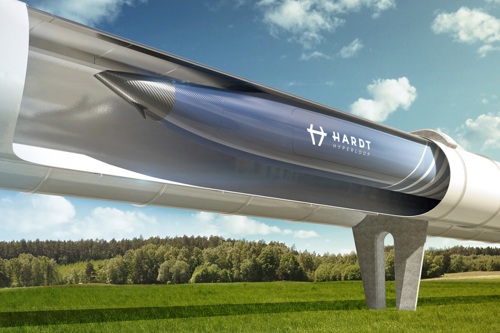
A consortium called Hardt Hyperloop has been assessing technologies such as magnetic levitation and has tested a propulsion system, weight simulation for passenger and cargo vehicles and low pressure environments. It also claims to have developed ‘lane switching’ technology that allows hyperloop vehicles to change between lanes without the need for moving components, allowing high speeds to be maintained.
The next step for the consortium is to build a 3km hyperloop track at an undisclosed location in Europe to test vehicles at high speed and to provide the basis for standardised hyperloop infrastructure and technology. Hardt has previously said that it predicts that Europe’s first hyperloop route will open in 2028.
At an event in the city of Delft on Thursday, consortium member InnoEnergy executive Jacob Ruiter said: “Bringing this technology to market will fundamentally change how we travel, offering a sustainable alternative to short haul flights as well as shortening journey times in comparison to cars and trains.”
Another company vying to build such a network is Virgin Hyperloop One. As reported in TP’s Future Mobility special in May, the firm plans to build ultra fast routes around the world including Toronto to Montreal in Canada and Miami to Orlando in America.


Join other savvy professionals just like you at CIHT. We are committed to fulfilling your professional development needs throughout your career
{{item.AuthorName}} {{item.AuthorName}} says on {{item.DateFormattedString}}: