
Government should bring forward a national bus strategy by 2020 with measures to improve services and increase passenger numbers, the Transport Select Committee has concluded following an inquiry.
Join other savvy professionals just like you at CIHT. We are committed to fulfilling your professional development needs throughout your career
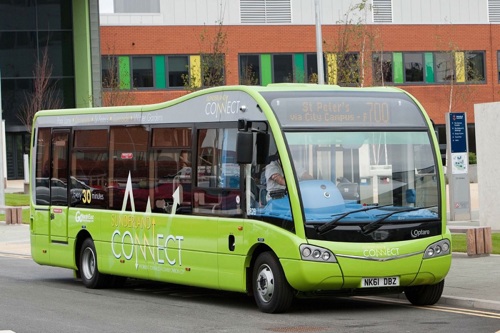
Its new report – published today – highlights a steady decline in bus patronage and the withdrawal of hundreds of routes, against a backdrop of what the committee described as ‘uncoordinated, fragmented Government policy and squeezed funding for councils’.
“This has direct consequences on people’s lives,” said Transport Select Committee chair Lilian Greenwood. “It narrows our transport options and pushes us towards less environmentally friendly choices.
“And yet, our inquiry found no real evidence that the Government was determined to take action to stop this.”
The report calls for the Government to produce a single bus strategy for England reflecting a desire to make services more ‘passenger focused’ and provide value for money. “This will also bring benefits for air quality, cutting carbon emissions and reducing congestion,” said Lilian Greenwood.
The proposed strategy, the report says, should describe a more stable multi year funding model for local transport and include plans to make a full suite of bus operating models available equally to all authorities. It should also assess the effectiveness of different bus priority measures and set out targets and guidance for achieving modal shift.
“Transport groups told us that passengers want simple and accurate information on ticketing and fares and reliable services that turn up on time and get you where you need to go,” emphasised Lilian Greenwood.
Local Government Association transport spokesman Martin Tett welcomed the calls for a single bus strategy and for the funding of bus services to be reformed.
“Ahead of the forthcoming Spending Review, Government needs to give councils control over the Bus Service Operators’ Grant and properly fund national free bus pass schemes if councils are to maintain our essential bus services, reduce congestion and pollution, and protect vital routes,” he said.
A Government spokesman said: “We thank the committee for this report and recognise the importance of the bus industry in connecting local communities, reducing congestion and improving air quality.
“Buses are the most popular form of public transport, accounting for 59% of all journeys, which is why we are giving councils £46.4Bn this year to meet the needs of their residents - an increase of more than £1Bn compared to last year.
“We are also making bus travel more convenient, by ensuring people have better access to real time information on fares, routes and services.”
The watchdog also recommends that discounted smart fares should be introduced for 16 to 18 year olds, after a survey found that young people are the least satisfied group of bus passengers.
(Photograph: Urban Transport Group)


Join other savvy professionals just like you at CIHT. We are committed to fulfilling your professional development needs throughout your career
{{item.AuthorName}} {{item.AuthorName}} says on {{item.DateFormattedString}}: