
National Highways has a key performance indicator for no ‘net loss of biodiversity’ across its estate by 2025 and net biodiversity gain by 2040. The Weymouth Relief Road shows what’s possible. By John Challen.
Join other savvy professionals just like you at CIHT. We are committed to fulfilling your professional development needs throughout your career
Biodiversity – as well as sustainability – has become one of the buzzwords across all industries in recent years. In the transport sector, the requirement to be respectful to the roadside surroundings has grown and now measures are being put in place to ensure that wildlife numbers increase and the net gains of biodiversity on projects are maximised.
One of the projects that best illustrates what is possible is the Weymouth Relief Road build, which took place between 2009-2011. “That is my main go-to example because of the scale of it,” says Phil Sterling, Building Sites for Butterflies programme manager at Butterfly Conservation, who worked on the scheme. “It was a £84 million project to build a 7km relief road, long before biodiversity net gain was even a concept.” Working with Dorset Wildlife Trust, Natural England and the RSPB, Sterling and colleagues set about designing a landscape for the verges using almost no topsoil. “Many of our native wildflowers in this country are all dependent upon really low fertility soils,” he explains. “Twelve years on and 30 species of butterfly have been recorded on the banks in Weymouth – that’s half of those on the British list – as well as 140 species of plant.”
Sterling calls the Weymouth project the pinnacle of his career due to the scale – seven hectares of wildflower grasslands were created with public access included across one of the cutting’s slopes. However, the benefits were not just limited to increased wildlife. “We figured the area would be vastly cheaper to maintain in the long term than mown grass which would be the norm,” he says. “On those seven hectares, there’s been just a few thousand pounds spent on maintenance over the past decade, because there’s so little to do. And that might be the case for the next 20 years, or even 40 years. It’s a habitat that doesn’t grow quickly. There are no safety issues because the flowers don’t grow tall enough to affect visibility.”
And Sterling’s vision has made a real difference in the transportation sector. “National Highways (Highways England) was one of my key audiences and it has changed its policy through listening to my experiences and looking at the Weymouth scheme,” he confirms. “Now, its approach is set towards using low nutrient substrates for open areas on all new major projects. So, hopefully, all new grasslands will become rich in wildflower.”
Sterling has two go-to species of plant that are great for butterflies – Kidney Vetch and Common Bird's-foot-trefoil. “There are 45 species of butterfly and moth in this country that live on Common Bird’s-foot-trefoil,” he reveals. “So if you sow that instead of grass, you can create a wonderful simple habitat for wildlife. Common Bird’s-foot-trefoil grows a bit like grass, but if it was planted systematically, it would make a huge difference to the number of not only butterflies and moths, but also bees and other pollinators.”
Should developers follow the example set by Sterling, they will see dramatic wildlife benefits, he says. “I would expect to see more Common Blue butterflies everywhere because they live on Common Bird’s-foot-trefoil and are found nationally,” he says. “Based on that approach, some of the species that have become rarer, in my view, will become as widespread in the countryside as they were in the 1950s and 1960s.”
Net loss and net gain of biodiversity is calculated using the Natural England metric, which is a calculator that looks at areas of habitat and the quality of that habitat. “The metric takes account of habitat size, type and condition of what is going to be lost, and what is going to be created,” says Sterling. It also takes into account the time taken for new habitats to mature. “The algorithm is becoming a really important tool in helping projects calculate what net gain could look like,” he adds. "From November 2023, any significant development that requires planning permission or a development consent order, will be mandated in England to produce 10% net gain. That's quite a steep ask for some schemes, so watch this space…”
One thing that Sterling himself will be looking out for is a net gain biodiversity ‘league’ or ranking for industry professionals, which he suggests is a win-win situation. “I would love to see it, I hope it would encourage good practice. Being able to present your best biodiversity gains is a benefit,” he believes. “Especially if you can prove that you’ve gone beyond the mandated 10%. To have big consultancies across the country working on national infrastructure being able to compare and contrast their biodiversity achievements, I think would really promote the innovation we need to see.”
CIHT offers many great courses on sustainability – find out more on CIHT Learn.
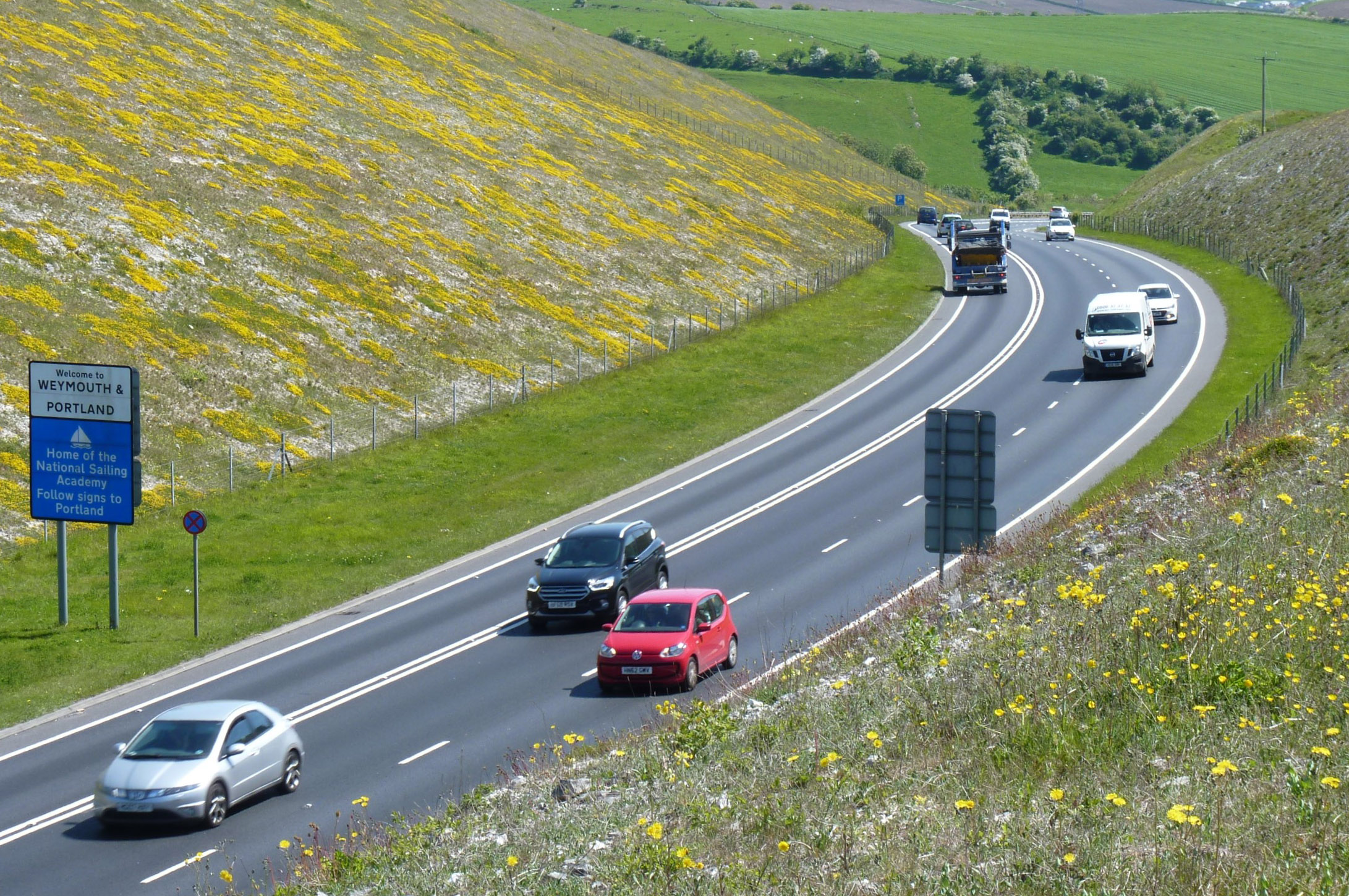
Photo credit: Phil Sterling
CIHT offers many great courses on sustainability – find out more on CIHT Learn.


Join other savvy professionals just like you at CIHT. We are committed to fulfilling your professional development needs throughout your career
{{item.AuthorName}} {{item.AuthorName}} says on {{item.DateFormattedString}}: