
Members of the public do not believe autonomous cars will be a common sight on UK roads for two to three decades and many feel reluctant to give up owning a vehicle, a major engagement exercise has found.
Join other savvy professionals just like you at CIHT. We are committed to fulfilling your professional development needs throughout your career
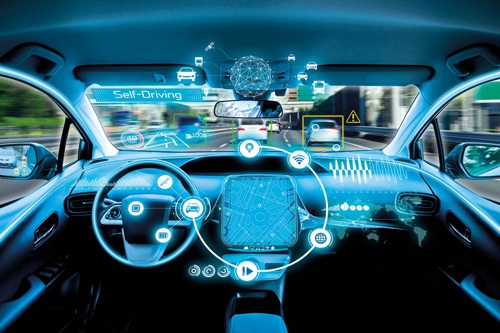
Participants in the ‘Traverse’ initiative – which saw a series of workshops to assess public acceptability issues around connected and autonomous vehicles (CAVs) – were generally positive about the possible impact of the technology.
But when considering possible different ownership models, many were not keen to give up vehicle ownership – which they associate with personal freedom – for the potential benefits of shared ownership or occupancy.
Suggested cost savings generally did not override this sentiment, unless it is to be a significant decrease of at least 25-50% compared with current journey costs, it was found.
Participants were also worried about CAVs interacting with conventional vehicles on the roads from a safety perspective, and see a clear need to update transport infrastructure to be compatible with the technology.
These concerns led many to believe that the vehicles would not be a common feature of road transport systems for at least 20 to 30 years.
Commenting on the engagement exercise, the head of Government’s Centre for Connected & Autonomous Vehicles Iain Forbes wrote in a foreword to the report: “Only by building public trust can we be confident of achieving the full benefits promised by these technologies.
“This public dialogue on connected and self driving vehicles has been truly groundbreaking – a world first – and provides a strong indication of the UK Government’s commitment to putting people at the heart of policy development.“
Attendees also had concerns about the safety of CAVs, citing the reliability of the technology and uncertainty over who would be responsible if things go wrong as particular worries.
The sessions also found that participants – especially drivers – valued the immediacy and convenience of their current transport options and some wanted reassurance that there would always be an option to take back control of a CAV.
Others were worried that if a vehicle was not fully automated it could be a safety risk when switching between automated and non-automated driving, or would limit the value of CAVs to people without driving licences.
(Image: Metamorworks – Shutterstock)


Join other savvy professionals just like you at CIHT. We are committed to fulfilling your professional development needs throughout your career
{{item.AuthorName}} {{item.AuthorName}} says on {{item.DateFormattedString}}: