
In association with Winvic Construction
Join other savvy professionals just like you at CIHT. We are committed to fulfilling your professional development needs throughout your career
By Arun Thaneja, Technical Services and Sustainability Director, Winvic.
The transition to a Net Zero built environment is one of the most significant challenges our industry has faced. Across highways, transportation and infrastructure, there is broad agreement of what needs to happen. The challenge now lies in how we can collectively deliver it in a practical, measurable and scalable way, while continuing to meet operational, commercial and sustainability objectives.
In recent years, sustainability commitments have become increasingly ambitious. This is both positive and necessary. However, there can often be a gap between ambition and delivery, driven in part by the range of frameworks, methodologies and guidance available to the industry. Whilst these have played an important role in advancing the Net Zero agenda, they have also led to differing interpretations of what Net Zero means in practice, and varying approaches to achieving it.
One area where the industry has made considerable progress is in Whole Life Carbon Assessment reporting. The publication of the UK Net Zero Carbon Buildings Standard represents an important milestone in providing greater consistency around how Net Zero performance is defined, assessed and verified. Alongside this, frameworks such as PAS 2080 have provided a far more consistent approach to measuring and managing carbon across infrastructure projects. Compared to just a few years ago, organisations are far better equipped to track and understand their carbon footprint. However, measuring carbon and reducing it remain two distinct challenges.
At Winvic, we have achieved PAS 2080 verification for three consecutive years, embedding whole-life carbon management and decarbonisation principles across our business and project delivery. This ensures carbon reduction remains central to our decision-making, influencing design, project outcomes and continuous improvement as a Carbon Neutral business.
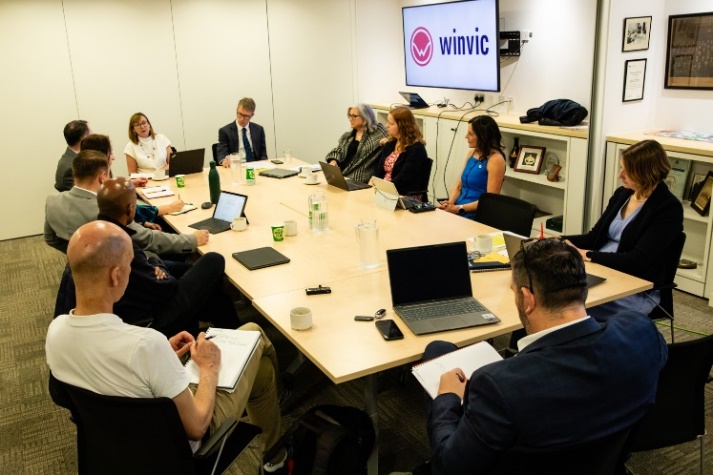
A recent Winvic ‘Carbon Council’ roundtable, held in partnership with the Chartered Institution of Highways & Transportation and attended by industry leaders from Jacobs, Amey Consulting, Leicestershire County Council, Mott MacDonald and the Lower Thames Crossing, highlighted that while carbon reporting has improved significantly, consistency of data and interpretation remains a challenge. Different organisations often assess carbon in different ways, making it difficult to compare performance, establish meaningful benchmarks and identify the most effective interventions.
Understanding carbon hotspots is crucial to delivering effective carbon reductions. Our data collection and analysis processes allow us to identify opportunities within projects, and understand the effectiveness of interventions, focusing investment and resource where it will have the greatest impact. Equally important is the adoption of common baselines and methodologies that enable carbon performance to be benchmarked consistently, ensuring progress, reductions and sustainability claims can be compared transparently across projects and organisations, ideally against an agreed standard.
In many cases, the challenge is not a lack of information, but rather a need for greater understanding of how to use it effectively. Environmental Product Declarations (EPDs), for example, provide valuable whole-life carbon data, yet there remains a need for wider sector understanding of how this information can be applied to inform design decisions and demonstrate carbon reduction opportunities. As an industry, we must continue to improve both the quality of data and our ability to interpret it.
Across the sector, clients, contractors, consultants and suppliers are investing in lower-carbon solutions and embedding carbon considerations more deeply into decision making alongside cost and programme. We have seen advancements in alternative fuels, plant electrification, material innovation and more efficient construction methodologies. Some solutions remain constrained by factors such as cost, availability, supporting infrastructure and market maturity, limiting their ability to be adopted consistently at scale.
Our experience of trialling hydrogen technology is a good example of this. Through trials and evaluation, we have seen first-hand the potential that alternative fuels play in reducing emissions from construction plant and infrastructure delivery, however availability remains limited and the supporting infrastructure is still developing. While we all want to see greater adoption of alternative fuels, the transition must be delivered through realistic and considered steps. The lessons learnt reinforce that success will depend on practical pathways that enable the industry to transition away from fossil fuels while maintaining project delivery and operational resilience. Widespread adoption of lower-carbon technologies will require the infrastructure, investment and market confidence needed to scale them as standard solutions, alongside greater recognition of their whole-life value.
Initiatives that test new materials, technologies and delivery approaches in real-world environments provide the evidence needed to understand what works and what can be scaled more widely. Equally important is ensuring that those lessons are shared across the industry so that innovation can move beyond isolated projects and become established best practice.
At Winvic, we recently launched our latest Sustainability and ESG Strategy, which reflects this practical approach to evolving industry standards. Our vision is to raise the bar for delivering sustainable buildings and infrastructure while leaving a lasting positive social, environmental and economic legacy. We recognise that the transition to a Net Zero built environment is not solely an environmental challenge; it is also a social and economic one. Supporting a Just Transition means ensuring that progress towards Net Zero is fair, inclusive and delivers long-term benefits for communities, businesses and the workforce.
The conversations taking place across industry forums, including the ‘Carbon Council’ roundtable, demonstrate a growing recognition that no single organisation can solve these challenges alone. Contractors, local authorities, clients, consultants, suppliers and government all have a role to play in creating the conditions for success. Success will depend on our ability to identify priority areas that intersect with those of our clients, supply chains and wider stakeholders.
By taking a collaborative approach, we are maximising the impact of our actions, delivering value beyond individual projects. This is reflected in the UKGBC Resilience Roadmap, which highlights the importance of understanding the interconnected risks and opportunities that exist across the industry. Through better data, clear standards, innovation and partnership, we have an opportunity to drive meaningful carbon reduction whilst continuing to deliver the buildings and infrastructure needed to support future growth. The organisations that succeed will be those that move beyond ambition alone and work collectively to turn shared objectives into measurable outcomes.
>>> Access the Roundtable Report
Winvic is a leading main contractor specialising in the design and delivery of private and public sector construction and civil engineering projects. Operating across the Industrial and Logistics, Data Centre, Multi-Room, and Civils and Infrastructure sectors, we combine technical expertise, innovative thinking and collaborative partnerships to deliver high-quality, sustainable solutions that create lasting value for our customers, communities and the environment


Join other savvy professionals just like you at CIHT. We are committed to fulfilling your professional development needs throughout your career
{{item.AuthorName}} {{item.AuthorName}} says on {{item.DateFormattedString}}: