
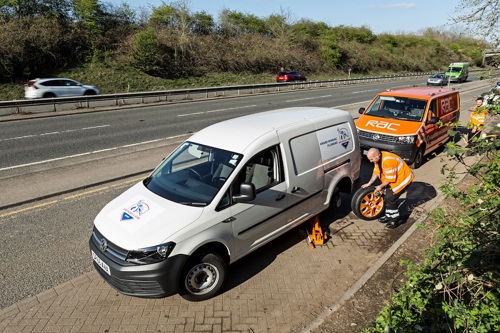
Roadside recovery vehicles including those used on motorways may soon be allowed to use flashing red lights after the former Transport Minister Michael Ellis pledged to review current rules in one of the final Parliamentary transport sessions of the last Government.
Join other savvy professionals just like you at CIHT. We are committed to fulfilling your professional development needs throughout your career
With less than half an hour to go before the new Prime Minister was announced, Michael Ellis said that the Department for Transport will review existing policy over the coming months. The next day he had left the Department in a Ministerial reshuffle that saw Grant Shapps become the new Transport Secretary.
In last Tuesday’s Westminster Hall debate, Tracey Crouch MP and former Transport Minister Mike Penning – now of the All Party Parliamentary Group for Roadside Rescue & Recovery – urged the Department to allow recovery vehicles to use red warning beacons while attending accidents and breakdowns, rather than amber ones.
“There are nearly half a million roadside recovery operators, in a variety of guises, who deserve protection,” she said. “In a traffic situation, everyone knows that red means stop and danger.”
She called on the Minister to review the Road Vehicles Lighting Regulations 1989, which currently prohibit roadside recovery vehicles from using red lights.
“This change in policy can be easily implemented,” she continued. “Highways England vehicles have recently joined the fire service in being exempt from these regulations via a statutory instrument; they are permitted to use red lights in their regulation of traffic around accidents and other road incidents. I see absolutely no reason why roadside recovery operators should not have that same level of protection.”
University of Leeds’ Professor of Colour Science and Technology Stephen Westland told TP Weekly News that red lights may be better than orange lights on roadside recovery vehicles, but added that “more research is needed before I could wholeheartedly endorse the change”.
There are two reasons why red lights might be better, he added. “They can be seen from further away than orange lights and although this effect is small, it may be significant in, for example, foggy conditions. Also, red light is more strongly associated with a danger/stop signal and I think this could result in drivers lowering their speed.”
RAC head of roads policy Nicholas Lyes said: “We are supportive of any changes that improve the safety of roadside recovery workers and patrols and feel that allowing operators of these vehicles to use red lights when in a stationary position and attending to vehicles would enhance their safety.
“We believe passing drivers would be more likely to understand the increased risk that a red light carries when compared to the amber lights that are currently used.”
(Photograph: RAC)


Join other savvy professionals just like you at CIHT. We are committed to fulfilling your professional development needs throughout your career
{{item.AuthorName}} {{item.AuthorName}} says on {{item.DateFormattedString}}: