
Powers to implement workplace parking levies and the UK’s first national ban on pavement parking will shortly come into force north of the border after the Transport (Scotland) Bill was passed by MSPs on Friday.
Join other savvy professionals just like you at CIHT. We are committed to fulfilling your professional development needs throughout your career
The Bill puts into law a requirement for the Scottish Government to have a national transport strategy and also includes measures on low emission zones, local bus services and smart ticketing.
“The Bill supports our efforts to make public and sustainable transport the preferred travel options,” said Scotland’s Cabinet Secretary for Transport, Infrastructure & Connectivity Michael Matheson.
It grants local authorities discretionary powers to establish workplace parking levy schemes that encourage modal shift away from private car travel to work and towards public and sustainable transport.
An attempt by Scottish Labour to remove this provision from the Bill was defeated last week. The measure, it is hoped, will help to improve air quality in Scottish cities and the Bill also allows councils to create and enforce low emission zones, with plans already in place to introduce zones in Glasgow, Edinburgh, Aberdeen and Dundee.
“The low emission zones provisions will improve air quality with Scotland’s four largest cities already committed to their introduction,” said Michael Matheson.
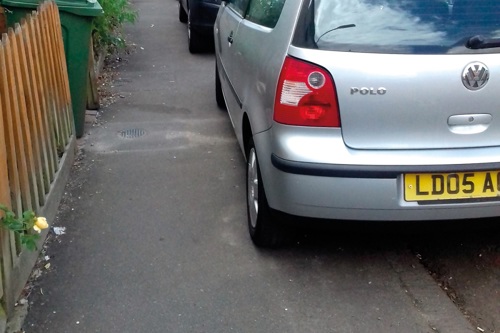
In addition the Bill introduces a national ban on pavement and double parking in Scotland and gives authorities powers to enforce it.
Welcoming this measure, Living Streets Scotland’s director Stuart Hay said: "People in wheelchairs, parents with pushchairs and older adults who are currently forced into oncoming traffic when faced with vehicles blocking their path will now be able to enjoy a new freedom.”
He added that the ban could “offer huge savings to cash strapped councils currently charged with fixing footways damaged by vehicles parking on them” and called on England and Wales to take Scotland’s lead on the issue.
Michael Matheson added that the Bill gives authorities new, flexible options to improve bus services and address current declines in passenger numbers.
“Those measures include a new statutory partnership model, franchising and the ability for local authorities to run buses themselves,” he said. “We are supporting the Bill through over £500M in bus priority infrastructure investment.”


Join other savvy professionals just like you at CIHT. We are committed to fulfilling your professional development needs throughout your career
{{item.AuthorName}} {{item.AuthorName}} says on {{item.DateFormattedString}}: