
Inside a long, narrow room only slightly wider than a train carriage in a far corner of the Parliamentary estate sat four politicians facing four rail sector representatives across a table, discussing strategies to improve the railways, writes TP editor Mike Walter.
Join other savvy professionals just like you at CIHT. We are committed to fulfilling your professional development needs throughout your career
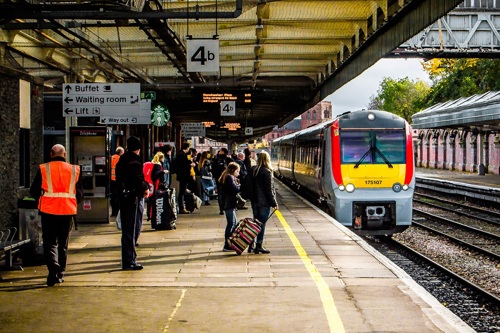
Timetabling, rail freight and the future of franchising were among the topics raised at the session hosted by the All Party Parliamentary Rail Group, which is taking a keen interest in an ongoing railway review conducted by Keith Williams.
The session was completed in about the time it takes to travel by train between Euston and Birmingham, but it is here that the comparisons with High Speed 2 end; the topic was (refreshingly) not mentioned once.
Monday’s hearing was more low key than those of the Transport Select Committee, with only a handheld camera on a tripod recording proceedings. But it did feature Dame Louise Ellman, the TSC’s former chair, who was on hand to pose several straightforward, no nonsense questions of the industry figures sat in front.
Rail consultant Jonathan Tyler gave the most compelling argument of the afternoon, that of the need for better timetabling and a new authority to look after timetables. He pointed out that current arrangements do not make the most of capacity or deliver the best service for passengers and freight. “There are many weaknesses in the system, verging on the completely dysfunctional,” he claimed.
But over in Switzerland – which apparently has just as complicated a rail system as we do – timetables make more sense and help to frame investment decisions. “A railway is a system and you can’t run it successfully if it is as fragmented as it is currently is,” Jonathan added.
He gave a few examples of timetabling anomalies: journeys from York to Huntingdon take longer than needs be, he claimed, as a change at Peterborough is poorly planned. And services in parts of Yorkshire are so infrequent that rail travel is unattractive to everyone other than those with no alternative, he added.
“What is needed is a central body to develop a more coherent timetable; with standard patterns repeating every day, rather than interminable fiddling around that results in irregular services,” he added.
Lord Berkeley from the All Party Parliamentary Rail Group said it is a widely accepted view that some change is necessary in the railways, with many arguing in favour of a new independent body to take over some of the running of the railway. But how should this be done, he asked. Is there a need for one or a series of bodies, what might it be responsible for and how can change be achieved without causing delays for passengers?
He also raised the question of whether the Strategic Rail Authority should be restored and asked if more trains should be lengthened to provide added capacity on certain routes.
Maggie Simpson of the Rail Freight Group called for a new framework for growth that allows more trains from new and existing locations. A shortage of HGV drivers, environmental concerns about road transport and better reliability on the railways are driving more people to rail, she said.
But she asked how Government, Network Rail or a future infrastructure manager might consider the needs of rail freight, pointing out that the movement of goods on rail can sometimes be overlooked in favour of passenger services.
Later on, Lord Scriven asked those assembled – including representatives from train operators Arriva and FirstGroup – why a new rail body, which is being championed by some, is needed to oversee the running of the network.
“It is not clear what the value added is and how it can be held to account in what is predominantly a tax funded pay system,” he argued.
Dame Louise Ellman detected that some might like to see “the politics taken out” of decision making on the railways. But she cautioned whether a new overseeing body might have “all sorts of powers” but they might not necessarily be aligned with how passengers use the railways. In short, she queried: “Where is the passenger voice?”
(Photograph: Network Rail)


Join other savvy professionals just like you at CIHT. We are committed to fulfilling your professional development needs throughout your career
{{item.AuthorName}} {{item.AuthorName}} says on {{item.DateFormattedString}}: