
Longer term thinking, further commitments to sustainable mobility and greater certainty of investment should be among the key transport priorities for the new Prime Minister’s administration, sector commentators have told TP Weekly News.
Join other savvy professionals just like you at CIHT. We are committed to fulfilling your professional development needs throughout your career
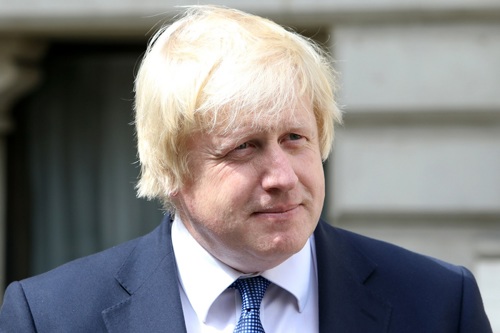
Boris Johnson is expected to meet with The Queen today following the resignation of Theresa May, and will form a new Government over the coming days.
“Transport’s biggest challenge will be ensuring consistency from the last administration to the new one,” said one senior consultant. “For years we have been plagued by the stop / start of projects. The importance of taking a long term view will be even more pressing as we grapple with the climate change agenda,” he added.
A local transport policy specialist agreed there is a need for stronger recognition of the role that transport must play in decarbonising society, while “maintaining the high degree of mobility we have all come to expect”.
The source said that future transport technologies including e-scooters and Mobility as a Service will be important in tackling the climate emergency.
Another senior figure involved in helping to shape transport policy called for a consistent approach in supporting strategies that champion sustainability. “We must cut back on vehicle emissions and fulfil our international obligations towards combating climate change,” he said. “This alone should focus Government on research, innovation and new technologies so that the UK is not to be left behind by other countries.”
Senior figures also said that the new Prime Minister will need to be clear about the Government’s position on major infrastructure projects, including High Speed 2 and a third runway at Heathrow.
But beyond that, other issues that need to be addressed include road user charging, increasing support for local bus services and the future of rail franchising.
“What has been missing from policy is any form of demand management, such as a road user charging scheme. This is would be tricky for Government to propose, but it has to offer carrots as well as sticks,” a consultant said.
A director of a highways contractor emphasised the need for greater focus on funding for highway renewals. “We have a healthy capital programme, but if we can’t even keep our current assets in good condition this will just create an additional maintenance headache.”
The source also called for better cost forecasting from the Government because “it is woeful when I hear that High Speed 2 has gone up another £30Bn, but there is little money for road maintenance”. Others suggest that major Government schemes also need to keep a careful watch on their scheduling, in light of the delayed opening of Crossrail in London.
Another commentator called for a multi year funding settlement for local transport – similar to the agreements in place for strategic roads and the railway network – and for the creation of a new private finance model for highway maintenance.
This comes as funding of £348M was announced by the Department for Transport this week to help tackle pothole and congestion problems on local roads over the next four years.
TP Weekly News also heard that HS2 is “the only project on the cards” which will start to bring about better connectivity between the north and south of the country, and is much needed to help rebalance the economy.
“Britain is like an aeroplane flying on one engine; the northern economy is spluttering and failing,” the source said.
Brexit is also a pressing issue, with commentators in the logistics sector warning of the impact of a no deal scenario and urging that the Government does all it can to minimise disruption.
A Cabinet reshuffle is expected following the appointment of the new Prime Minister, with all eyes on who will be the new Transport Secretary, or whether the incumbent Chris Grayling will remain in post.
But above all else, delivery of the UK’s existing infrastructure pipeline must be championed from the very top of Government, according to another well placed source. “Many exciting and transformative transport projects like High Speed 2, Northern Powerhouse Rail and Crossrail 2 are opportunities for the UK to showcase its planning, engineering and design expertise to the rest of the world,” he said.
“Building a future ready Britain might start with policies and announcements, but it only ever becomes a reality once the projects on which it relies are delivered.”
(Photograph: Foreign & Commonwealth Office)


Join other savvy professionals just like you at CIHT. We are committed to fulfilling your professional development needs throughout your career
{{item.AuthorName}} {{item.AuthorName}} says on {{item.DateFormattedString}}: