
People suffering from mental health conditions should be issued with free rail passes to help build their confidence, a transport accessibility seminar has heard.
Join other savvy professionals just like you at CIHT. We are committed to fulfilling your professional development needs throughout your career
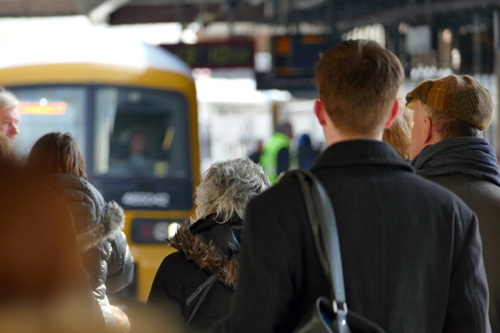
Arthur Breens of the Kingsdown Residents Association in Ealing said offering complimentary train travel to people with depression could encourage them to use the rail network and help stop them becoming isolated or housebound.
He asked Network Rail’s senior strategic planner Connor Lempriere if its forthcoming ‘Railway for Everyone’ report had considered the idea. Connor replied that the suggestion is “the sort of thing we would like to see put forward” to a public consultation. A first draft of the report will be published on 16 August and comments are invited until 11 October.
Transport accessibility advisor Ann Bates added that some train companies offer ‘Try a Train’ days to help get people back onto the rail network and commented that such schemes should be adopted more widely.
Delegates to the London Travel Watch event at City Hall also heard that the Government will launch a public information campaign later this year to raise awareness of the needs of disabled travellers, especially for those with disabilities that are not visible.
The Department for Transport’s deputy director of active and accessible travel Rupert Furness also said that an Inclusive Transport Leaders Scheme will be developed later this year to incentivise transport operators to undertake disability awareness training to improve the travel experience for those with special needs.
Also presenting was Leo Capella from the National Autistic Society who said that transport operators must ensure their services meet the needs of people with autism, who can experience anxiety in unexpected situations and may need extra time to process information. In a recent survey, he said that 79% of autistic people feel socially isolated, 53% avoid travelling by bus and 45% avoided the underground or metro. “This can be a slippery slope to using no transport and a recipe for isolation,” he commented.
He was asked what can be done to help pedestrians who suffer from autism around stations. Leo replied that more thought needs to be put into informing people when construction works are planned, so autism suffers can prepare or plan alternative journeys in advance.
(Photograph: Office of Rail and Road and licensed for reuse under this Creative Commons Licence)


Join other savvy professionals just like you at CIHT. We are committed to fulfilling your professional development needs throughout your career
{{item.AuthorName}} {{item.AuthorName}} says on {{item.DateFormattedString}}: